Lots of housekeeping to do today, blog-wise, so let's get to it:
1) The semi-final matches of the Silent Era/1930s bracket in All Good Things' best actress March Madness tournament is underway. Match-ups are number six seed Claudette Colbert versus ten seed Irene Dunne and four seed Carole Lombard versus nine seed Myrna Loy. Remember, democracy only works if you vote—and rarely even then—so click on over and do your part.
2) As for my own trivial pursuits, during Turner Classic Movies' 31 Days of Oscar marathon I passed along questions about Oscar history from TCM's monthly Now Playing magazine, 66 questions in all. No surprise, MovieNut14 answered the most questions correctly and wins the first annual Movie Nut Trivia Award, which consists of nothing more than worldwide recognition and a pat on the back. MovieNut14 is a self-described "Female teen living in upstate New York who's obsessed with movies and books." She also writes the blog Defiant Success. Check it out.
The final totals, quiz-wise:
MovieNut14—28 Erik Beck—9 Zoe—8 The Mythical Monkey himself—6 Beelzabub—3 Katie-Bar-The-Door—3 Dave—2 Jason Marshall—2 WhistlingGypsy—2 Ginger Ingenue—1 Mister Muleboy—1 Uncle Tom—1
Not to mention, the questions generated lots of comments, even from those who weren't answering the trivia, which is always fun. Thanks to everyone who participated—and, for that matter, to all those who didn't.
3) The results are in from the latest Monkey poll, "Of the top five songs in movie history, as chosen in 2004 by the American Film Institute, which is your favorite?" The results very nearly mirrored the AFI's list: "Over The Rainbow" (The Wizard Of Oz) was your favorite with 26 votes. "As Time Goes By" (Casablanca), which jumped out to an early 6-0 lead, wound up second with 16 votes. "Singin' In The Rain" (Singin' In The Rain), which was third on the AFI list, finished fourth here with 5 votes. "Moon River" (Breakfast At Tiffany's) tallied 6 votes and "White Christmas" (Holiday Inn) scored but a single vote.
In case you're interested, Barack Obama, president of these here United States of America, mentioned earlier in the week that his favorite song from a movie is "As Time Goes By" from Casablanca. So said the Washington Post. Perhaps he's a secret reader of the Mythical Monkey. If so, welcome, Mr. President! It's a big tent we pitch here and whatever brings you to the party, here's hoping you stick around.
4) And how about a new poll? Of the four biggest Oscar snubs in history as chosen by EW.com, which overlooked performance most deserved a nomination?
Your choices are:
James Stewart (Vertigo) Anthony Perkins (Psycho) Cary Grant (The Philadelphia Story) Ingrid Bergman (Casablanca) As usual, cast your vote in the poll at the right hand side of the page.
Oscar Falls In Love Among the romantic Best Picture winners shown in honor of Valentine's Day is the 1940 screen version of a Philip Barry play starring Katharine Hepburn and Cary Grant. Name it.
All In The Family Sometimes members of the same family collaborate on a film and are rewarded with nominations. What writer-director was nominated for best Adapted Screenplay of 1982 while guiding his wife to a Best Actress nomination as the star of his musical-comedy?
Turner Classic Movies' annual "31 Days Of Oscar" marathon starts tomorrow morning at 6 a.m. Here's the schedule:
All Times Eastern
The Right Direction 1 Tuesday 6:00 AM Eskimo (1933) 8:00 AM Hide-Out (1934) 9:30 AM Manhattan Melodrama (1934) 11:15 AM Thin Man, The (1934)
Self-Made Men 1:00 PM Citizen Kane (1941) 3:00 PM Great Dictator, The (1940) 5:15 PM Richard III (1955)
What A Character! 8:00 PM Private Life Of Henry VIII, The (1933) 10:00 PM Man for All Seasons, A (1966) 12:15 AM Anne Of The Thousand Days (1969)
Love At First Sight 2:45 AM Last Summer (1969) 4:30 AM Anthony Adverse (1936)
2 Wednesday 7:00 AM Great Waltz, The (1938) 8:45 AM Little Foxes, The (1941) 11:00 AM Nicholas and Alexandra (1971) 2:15 PM Heart Is A Lonely Hunter, The (1968) 4:30 PM Lonelyhearts (1958) 6:15 PM Moon Is Blue, The (1953)
Most Nominated Actor 8:00 PM Five Easy Pieces (1970) 10:00 PM Terms of Endearment (1983) 12:30 AM Easy Rider (1969) 2:15 AM Last Detail, The (1973)
Husbands And Wives 4:15 AM Guardsman, The (1931)
3 Thursday 6:00 AM Witness For The Prosecution (1957) 8:00 AM Who's Afraid Of Virginia Woolf? (1966)
Four In One 10:30 AM Guess Who's Coming to Dinner (1967) 12:30 PM Johnny Belinda (1948) 2:30 PM For Whom The Bell Tolls (1943) 5:30 PM Streetcar Named Desire, A (1951)
1929-1930 8:00 PM Love Parade, The (1929) 10:00 PM All Quiet On The Western Front (1930) 12:30 AM Big House, The (1930) 2:00 AM Divorcee, The (1930) 3:30 AM Disraeli (1929)
Kerr Trouble 5:00 AM Edward, My Son (1949)
4 Friday 7:00 AM Separate Tables (1958) 9:00 AM Sundowners, The (1960)
Like Kissing Your Sister 11:30 AM Champ, The (1931) 1:00 PM Dr. Jekyll And Mr. Hyde (1932) 2:45 PM Lion In Winter, The (1968) 5:15 PM Funny Girl (1968)
An All-Knighter 8:00 PM Heiress, The (1949) 10:00 PM Bridge On The River Kwai, The (1957) 1:00 AM Ryan's Daughter (1970) 4:30 AM Mourning Becomes Electra (1947)
5 Saturday 7:15 AM Othello (1965) 10:15 AM Becket (1964)
The Good Luck Charm 1:00 PM Mr. Deeds Goes to Town (1936) 3:00 PM One Hour With You (1932) 4:30 PM Awful Truth, The (1937) 6:15 PM Father Of The Bride (1950)
Real Men 8:00 PM Stand And Deliver (1988) 10:00 PM Gandhi (1982) 1:30 AM Ali (2001) 4:30 AM Lust For Life (1956)
6 Sunday 7:00 AM Conquest (1937) 9:00 AM Abe Lincoln In Illinois (1940) 11:00 AM Jolson Story, The (1946) 1:15 PM Birdman Of Alcatraz (1962) 3:45 PM Viva Zapata! (1952) 5:45 PM Pride Of The Yankees, The (1942)
Retired Categories 8:00 PM Sunrise (1927) 10:00 PM Wings (1927) 12:30 AM House on 92nd Street, The (1945) 2:15 AM Viva Villa! (1934) 4:15 AM Damsel In Distress, A (1937)
All Or Nothing 7 Monday 6:00 AM Here Comes the Navy (1934) 7:30 AM Trader Horn (1931) 10:00 AM House of Rothschild, The (1934) 12:00 PM Libeled Lady (1936)
Picture Perfect 1:45 PM Black Swan, The (1942) 3:15 PM Snows Of Kilimanjaro, The (1952) 5:15 PM South Pacific (1958)
Playing Out The String 8:00 PM Blossoms In The Dust (1941) 10:00 PM Mrs. Miniver (1942) 12:30 AM Madame Curie (1943) 2:45 AM Mrs. Parkington (1944) 5:00 AM Valley Of Decision, The (1945)
The Most Nominations ... Without Winning 8 Tuesday 7:00 AM Shoes of the Fisherman, The (1968) 9:45 AM Seven Brides For Seven Brothers (1954) 11:30 AM 2010 (1984) 1:30 PM Hanging Tree, The (1959) 3:30 PM On the Beach (1959) 5:45 PM Caine Mutiny, The (1954)
Winners In Both Leading And Supporting Roles 8:00 PM Gaslight (1944) 10:00 PM Kramer vs. Kramer (1979) 12:00 AM Glory (1989) 2:30 AM Sin Of Madelon Claudet, The (1931)
Alien Invasions 4:30 AM Red (1994)
9 Wednesday 6:30 AM Woman In The Dunes (1964) 8:45 AM Battaglia di Algieri, La (1967) 11:00 AM Z (1969)
The Write Stuff 1:30 PM Ball Of Fire (1941) 3:30 PM Foreign Affair, A (1948) 5:30 PM Fortune Cookie, The (1966)
Memorable Oscar Moments 8:00 PM Come Back, Little Sheba (1952) 10:00 PM Cavalcade (1933) 12:00 AM What Ever Happened to Baby Jane? (1962)
Sweet Music 2:30 AM Some Came Running (1958) 5:00 AM Robin And The 7 Hoods (1964)
10 Thursday 7:15 AM Rich, Young And Pretty (1951) 9:00 AM Because You're Mine (1952) 11:00 AM Tonight and Every Night (1945) 12:45 PM Romance On The High Seas (1948) 2:30 PM Anchors Aweigh (1945) 5:00 PM Star! (1968)
The Most Decorated Decorator 8:00 PM Annie Get Your Gun (1950) 10:00 PM American in Paris, An (1951) 12:00 AM Too Young To Kiss (1951) 2:00 AM Picture of Dorian Gray, The (1945) 4:00 AM Thousands Cheer (1943)
11 Friday 6:15 AM National Velvet (1944) 8:30 AM Yearling, The (1946) 10:45 AM Random Harvest (1942) 1:00 PM Quo Vadis (1951) 4:00 PM Executive Suite (1954) 5:45 PM Little Women (1949)
Any Regrets? 8:00 PM Graduate, The (1967) 10:00 PM Forrest Gump (1994) 12:30 AM Pretty Woman (1990) 2:45 AM Cat Ballou (1965)
Brother And Sister Acts 4:30 AM Free Soul, A (1931)
12 Saturday 6:15 AM None but the Lonely Heart (1944)
The Best Of The Best 8:15 AM Dark Victory (1939) 10:00 AM Of Mice and Men (1939) 12:00 PM Ninotchka (1939) 2:00 PM Wuthering Heights (1939) 4:00 PM Stagecoach (1939) 5:45 PM Mr. Smith Goes to Washington (1939) 8:00 PM Wizard Of Oz, The (1939) 10:00 PM Gone With the Wind (1939) 2:00 AM Goodbye, Mr. Chips (1939) 4:00 AM Love Affair (1939)
They Shoot, He Scores 13 Sunday 6:00 AM Cowboy And The Lady, The (1938) 8:00 AM Keys of the Kingdom, The (1945) 10:30 AM Camelot (1967) 1:45 PM Daddy Long Legs (1955) 4:00 PM Coney Island (1943) 6:00 PM Mother Wore Tights (1947)
It Takes Two 8:00 PM Miracle On 34th Street (1947) 10:00 PM Going My Way (1944) 12:30 AM Here Comes Mr. Jordan (1941) 2:15 AM Story of Louis Pasteur, The (1935)
Oscar Falls In Love 4:00 AM Room With a View, A (1985)
14 Monday 6:00 AM Alice Adams (1935) 8:00 AM Flirtation Walk (1934) 10:00 AM More the Merrier, The (1943) 12:00 PM Talk Of The Town, The (1942) 2:00 PM Bishop's Wife, The (1947) 4:00 PM Philadelphia Story, The (1940) 6:00 PM Goodbye Girl, The (1977)
All In The Family 8:00 PM Rachel, Rachel (1968) 10:00 PM Casablanca (1942) 12:00 AM Treasure of the Sierra Madre, The (1948) 2:15 AM Victor/Victoria (1982)
French Kisses 4:45 AM Cousin, Cousine (1975)
15 Tuesday 6:30 AM Au Revoir, Les Enfants (1987) 8:15 AM Last Metro, The (1980) 10:30 AM Black Orpheus (1959) 12:30 PM Mon Oncle (1958)
The Most Writing Nominations 2:30 PM Alice (1990) 4:30 PM Radio Days (1987) 6:00 PM Hannah and Her Sisters (1986)
Oscar Firsts 8:00 PM My Man Godfrey (1936) 10:00 PM Cimarron (1931) 12:15 AM Lilies of the Field (1963) 2:00 AM Kiss of the Spider Woman (1985) 4:15 AM Two Women (1960)
16 Wednesday 6:00 AM Grand Illusion (1937) 8:00 AM Chang (1927) 9:30 AM Lady For A Day (1933) 11:15 AM Life Of Emile Zola, The (1937) 1:15 PM Since You Went Away (1944) 4:15 PM Sounder (1972) 6:15 PM Swing Time (1936)
It's An Honor Just To Be Nominated 8:00 PM My Favorite Year (1982) 10:00 PM Lawrence of Arabia (1962) 2:00 AM Stunt Man, The (1980) 4:15 AM Ruling Class, The (1972)
17 Thursday 7:00 AM Goodbye, Mr. Chips (1969)
How To Earn An Oscar Nomination? 10:00 AM Never On Sunday (1960) 12:00 PM Butterfield 8 (1960) 2:00 PM Street Angel (1928) 4:00 PM Anna Christie (1930) 5:30 PM Irma La Douce (1963)
Auspicious Debuts 8:00 PM 12 Angry Men (1957) 10:00 PM Chariots Of Fire (1981) 12:15 AM Room at the Top (1959) 2:15 AM American Beauty (1999)
Oscar ♥ New York 4:15 AM Do the Right Thing (1989)
18 Friday 6:30 AM Naked City (1948) 8:15 AM Dead End (1937) 10:00 AM Five Star Final (1931) 11:45 AM On the Town (1949) 1:30 PM It's Always Fair Weather (1955) 3:15 PM My Sister Eileen (1942) 5:00 PM Producers, The (1968) 6:30 PM It Should Happen To You (1954)
The Most Writing Wins 8:00 PM Hospital, The (1971) 10:00 PM Marty (1955) 12:00 AM Network (1976) 2:15 AM Goddess, The (1958)
The Most Best Actor Nominations 4:15 AM San Francisco (1936)
19 Saturday 6:15 AM Bad Day At Black Rock (1955) 7:45 AM Old Man and the Sea, The (1958) 9:15 AM Inherit The Wind (1960) 11:30 AM Captains Courageous (1937)
The Most Supporting Actor 1:30 PM Come And Get It (1936) 3:30 PM Westerner, The (1940) 5:30 PM Sergeant York (1941)
Clean Sweeps 8:00 PM Gigi (1958) 10:00 PM Lord of the Rings: Return of the King (2003) 1:30 AM Last Emperor, The (1987)
Nominated For Best Director, Not Best Picture 4:15 AM Blow-Up (1966)
20 Sunday 6:15 AM 2001: A Space Odyssey (1968) 9:00 AM Summertime (1955) 11:00 AM Morocco (1930) 12:45 PM In Cold Blood (1967) 3:15 PM Third Man, The (1949) 5:15 PM Inn of the Sixth Happiness, The (1958)
From Stage To Screen 8:00 PM Born Yesterday (1950) 10:00 PM My Fair Lady (1964) 1:00 AM Auntie Mame (1958) 3:30 AM Hasty Heart, The (1950) 5:30 AM Night Must Fall (1937)
21 Monday 7:30 AM Subject Was Roses, The (1968) 9:30 AM Sweet Bird Of Youth (1962) 12:00 PM Watch On The Rhine (1943) 2:00 PM Magnificent Yankee, The (1950) 3:30 PM Bad Seed, The (1956) 6:00 PM Member of the Wedding, The (1952)
Oscar Onlys 8:00 PM State Fair (1945) 10:00 PM Best Years Of Our Lives, The (1946) 1:00 AM Pygmalion (1938) 2:45 AM Two Arabian Knights (1927) 4:30 AM Midsummer Night's Dream, A (1935)
22 Tuesday 7:00 AM Divine Lady, The (1929) 8:45 AM Limelight (1952) 11:15 AM Day At The Races, A (1937) 1:15 PM Ship of Fools (1965) 3:45 PM Devil and Daniel Webster, The (1941) 5:45 PM Skippy (1931) 7:15 PM Red Balloon,The (1956)
Two In One 8:00 PM Defiant Ones, The (1958) 10:00 PM Amadeus (1984) 1:00 AM Thelma & Louise (1991) 3:15 AM Giant (1956)
23 Wednesday 6:45 AM Suddenly, Last Summer (1959)
Sound Bites 8:45 AM Too Many Husbands (1940) 10:15 AM Lost Horizon (1937) 12:30 PM You Were Never Lovelier (1942) 2:15 PM Sahara (1943) 4:00 PM Cover Girl (1944) 6:00 PM Song to Remember, A (1945)
Best Picture, But Not Most Academy Awards 8:00 PM All the King's Men (1949) 10:00 PM You Can't Take It With You (1938) 12:15 AM Great Ziegfeld, The (1936)
Most Honored Foreign Director 3:30 AM Amarcord (1973)
24 Thursday 6:00 AM 8 1/2 (1963) 8:30 AM La Strada (1954)
Awards By Association 10:30 AM Lavender Hill Mob, The (1951) 12:00 PM Great Expectations (1946) 2:00 PM Cromwell (1970) 4:30 PM Doctor Zhivago (1965)
Most Directing Nominations 8:00 PM Dodsworth (1936) 10:00 PM Ben-Hur (1959) 2:00 AM Friendly Persuasion (1956) 4:30 AM Collector, The (1965)
Sister Acts 25 Friday 7:00 AM Suspicion (1941) 9:00 AM To Each His Own (1946)
Rookies Of The Year 11:15 AM Marie Antoinette (1938) 2:00 PM Corn Is Green, The (1945) 4:00 PM Search, The (1948) 6:00 PM Bus Stop (1956)
Five For Four 8:00 PM On The Waterfront (1954) 10:00 PM From Here To Eternity (1953) 12:15 AM Tom Jones (1963) 2:30 AM Bonnie and Clyde (1967)
On Second Thought 4:30 AM Mutiny on the Bounty (1962)
26 Saturday 7:45 AM Ivanhoe (1952) 9:45 AM King Solomon's Mines (1950) 11:45 AM Adventures of Robin Hood, The (1938) 1:45 PM Letter, The (1940) 3:30 PM Maltese Falcon, The (1941) 5:30 PM Fanny (1961)
The Big Five 8:00 PM It Happened One Night (1934) 10:00 PM One Flew Over The Cuckoo's Nest (1975) 12:30 AM Silence Of The Lambs, The (1991)
Real Women 2:45 AM Frances (1982) 5:15 AM Silkwood (1983)
27 Sunday 8:00 AM Sister Kenny (1946) 10:30 AM I'll Cry Tomorrow (1955) 12:45 PM I Want To Live! (1958) 3:00 PM Sunrise At Campobello (1960) 5:30 PM Joan Of Arc (1948)
Notable No-Shows 8:00 PM Mildred Pierce (1945) 10:00 PM Annie Hall (1977) 12:00 AM Informer, The (1935) 2:00 AM Morning Glory (1933)
The Lion Roars 3:30 AM Smilin' Through (1932) 5:30 AM Broadway Melody Of 1936 (1935)
28 Monday 7:30 AM David Copperfield (1935) 9:45 AM Tale Of Two Cities, A (1935) 12:00 PM Citadel, The (1938) 2:00 PM Human Comedy, The (1943) 4:00 PM Test Pilot (1938) 6:00 PM Battleground (1949)
Nominations In A Bottle? 8:00 PM Arthur (1981) 10:00 PM Lost Weekend, The (1945) 12:00 AM Days of Wine and Roses (1962) 2:00 AM Under the Volcano (1984) 4:00 AM Dresser, The (1983)
1 Tuesday 6:15 AM Johnny Eager (1942) 8:15 AM Cat On A Hot Tin Roof (1958)
Two By Four 10:30 AM Star Is Born, A (1937) 12:30 PM Star Is Born, A (1954) 3:30 PM Cyrano De Bergerac (1950) 5:30 PM Cyrano de Bergerac (1990)
Oscar Mosts 8:00 PM Emperor Waltz, The (1948) 10:00 PM All About Eve (1950) 12:30 AM Cabaret (1972) 2:45 AM Somebody Up There Likes Me (1956) 4:45 AM Yesterday, Today and Tomorrow (1963)
The Most Honored Producer 2 Wednesday 6:45 AM Yankee Doodle Dandy (1942) 9:00 AM Jezebel (1938) 11:00 AM All This, and Heaven Too (1940) 1:30 PM Captain Blood (1935) 3:45 PM Kings Row (1942) 6:15 PM Four Daughters (1938)
Gone But Not Forgotten 8:00 PM East Of Eden (1955) 10:00 PM Around The World In 80 Days (1956) 1:30 AM Greystoke: The Legend of Tarzan, Lord of the Apes (1984) 4:00 AM Obsession (1976)
3 Thursday 6:00 AM Great Caruso, The (1951) 8:00 AM Merry Widow, The (1952) 10:00 AM Way We Were, The (1973) 12:30 PM North By Northwest (1959) 3:00 PM Kind Lady (1951) 4:30 PM Strip, The (1951) 6:00 PM Shall We Dance (1937)
One And Done 8:00 PM Grand Hotel (1932) 10:00 PM Mutiny on the Bounty (1935) 12:30 AM Broadway Melody, The (1929)
Nominated For Playing A Nominee 2:15 AM Star, The (1952) 4:00 AM California Suite (1978)
107 years old today, and more highly regarded now as an actor than he ever was during his lifetime. The forty-five years that have passed since his retirement without a worthy successor have proved that, while he may have made it look easy, it most certainly wasn't easy.
Here's a photo of Cary Grant, circa 1934. Katie-Bar-the-Door insists he gets better looking the older he gets. Something for you to look forward to.
This is what makes blogging all worthwhile: our good friend Who Am Us of the blog Who Am Us Anyway (check it out here) wrote in the comment section of "Carole Lombard In The Public Domain" that "Believe or no, this was my first-ever viewing of My Man Godfrey." To introduce someone to a classic movie—well, for a blogger, it doesn't get any better than that.
That he also had the same reaction to My Man Godfrey that I did, that's just icing on the cake:
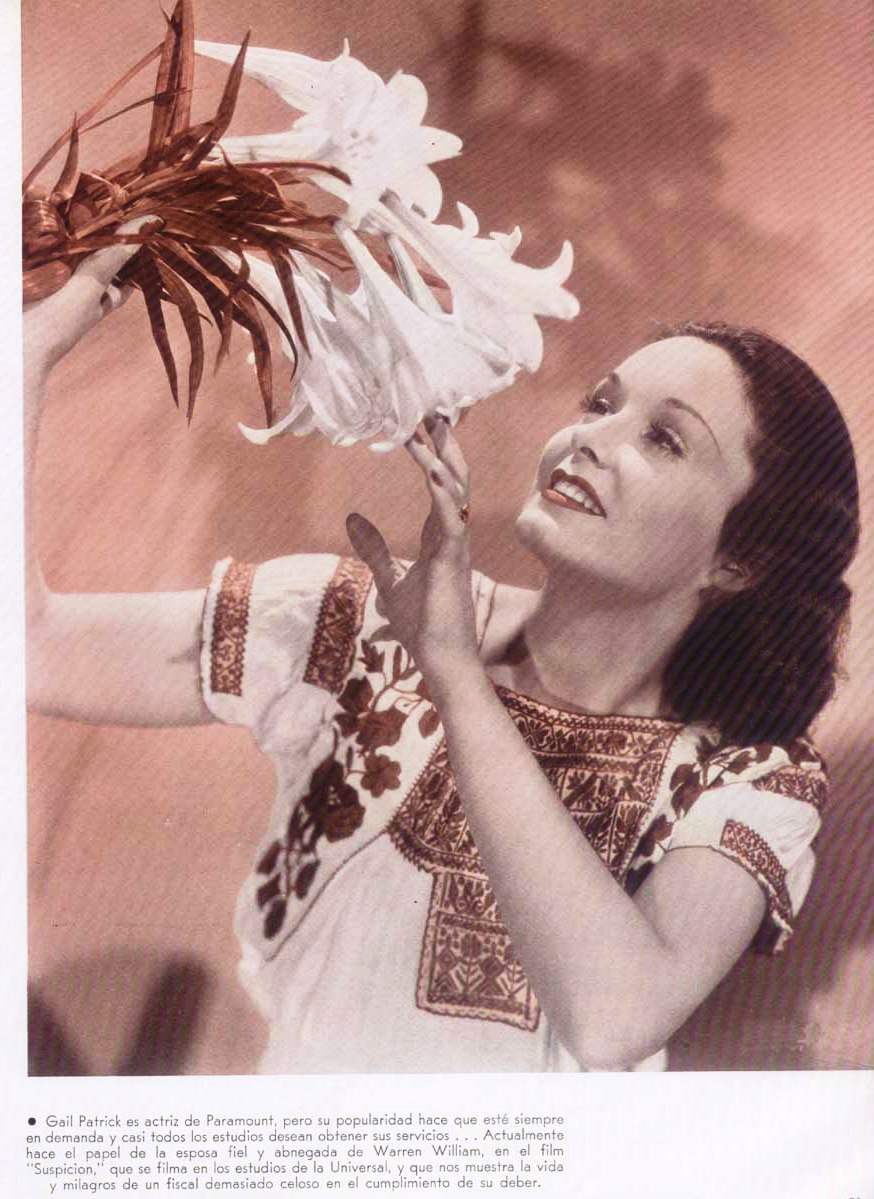
And ahh, Gail Patrick as Cornelia—have you written about her before? Must check ... dang! The search button produces results in the amount of zero! Well, I'm a Gail fan starting tonight ...
That's the phenomenon known as "the hotter younger sister," which the fine, fine folks at Bright Lights After Dark wrote about at some length last year. As they so eloquently put it, "damn is she hot!"
Amen, brother.
Born Margaret LaVelle Fitzpatrick in Birmingham, Alabama, Patrick was the dean of women at Howard College and was studying law at the University of Alabama when she entered a nationwide contest for a part in a Paramount film. She didn't win, but she was offered a film contract and moved to Hollywood.
Appropriate to a blog currently covering 1932-33, Patrick made her film debut in the 1932 film If I Had A Million, starring Gary Cooper, Charles Laughton and George Raft. She typically played arrogant socialites and femme fatales and is best known for three comedic roles—Carole Lombard's scheming sister in My Man Godfrey, a haughty wannabe actress who clashes with Ginger Rogers and Katharine Hepburn in Stage Door and Cary Grant's not-so-favored bride in My Favorite Wife.
Patrick appeared in sixty-two movies between 1932 and 1948.
She abandoned acting when she married her third husband, literary agent Cornwell Jackson. One of Jackson's clients was mystery writer Erle Stanley Gardner who created the fictional defense lawyer Perry Mason. Patrick (credited now as Gail Patrick Jackson) obtained the rights to Perry Mason and for nine seasons produced one of the most successful television series in American history.
Patrick died of leukemia in 1980 at the age of sixty-nine.
[To read Part One of this essay, click here; for Part Two, here; and for Part Three, here.]
Beyond The Legend Perhaps Jean Harlow was always more than just one of the legion of lovelies populating the backlots of Hollywood's studios. On looks alone—those platinum blonde tresses fascinated men and women alike—she had enjoyed box office success with Hell's Angels, The Public Enemy and Platinum Blonde, and frankly, less attractive actresses with even more limited talent than Harlow displayed in those early efforts managed careers that lasted for years. But Harlow didn't rest on her beauty, and worked hard to develop into, arguably, the finest comedic actress of the decade.
"I was not a born actress," she confessed without embarrassment. "No one knows it better than I. If I had any latent talent, I have had to work hard, listen carefully, do things over and over and then over again in order to bring it out."
She wasn't coy about her looks— you might as well ask the sun to be coy about the dawn— but unlike her con- temp- orary, Mae West, who played the vamp as broadly as a drag queen and reduced sex to a quick, cheap commercial transaction, Harlow acknowledged her appeal with a shrug then moved past it, as if to say, "Of course I like sex—what's that got to do with you and me?" and as a result was much sexier than Mae West ever dreamed of being.
"She has a walk that's a marvel," critic Gerald Weales wrote. "It contains little of the teasing seductiveness that Hollywood sex goddesses are supposed to display. Her sexuality is direct and matter-of-fact: she moves like an athlete."
Cary Grant had the same sort of thing. Yes, he was incredibly handsome, suave, sophisticated; yet he was so secure, he was willing to make a complete fool of himself (think of the scene with the chair in The Awful Truth, if you've been lucky enough to see it) and as a result is all the more handsome for it.
Same thing with Jean Harlow. She was beautiful but it's her sense of humor and lack of self-importance that you react to. That curvy little body winds up being icing on the cake.
"Harlow was rather like a boy," screenwriter Anita Loos observed. "She had no vanity whatsoever. Things which she did that seemed outrageous, she did because she had no feeling of any kind herself, so she didn't think they affected other people. Also, she had this extraordinary beauty which she'd been born with and had for her whole life, so she wasn't conscious of it. But utterly no vanity. None at all."
Off screen, she was much like the characters she played—not educated but not dumb either, sharp as a matter of fact; beautiful but not interested in her own beauty; funny and disarmingly down-to-earth, without guile or vanity; and cursed with a disastrous luck in men—with two chief differences: she hadn't scrabbled her way up from the working class, but had in fact been born to the purple in Kansas City's upper class society; and she hated wearing those tight-fitting gowns that designers such as Adrian always sewed her into, preferring sports clothes, loose sweaters and slacks.
"Underwear makes me uncomfortable," she said, "and besides, my parts have to breathe."
After the critical and commercial successes of Red Dust and Dinner At Eight, Jean Harlow leapt to the top of her profession, surpassing Joan Crawford, Greta Garbo and Norma Shearer as the most popular actress at MGM. And although Hollywood began enforcing the Production Code in 1934 and as a result toned down the more explicit sexuality of her movies, Harlow nevertheless remained an audience favorite. In fact, from 1932 until her untimely death in 1937, Harlow had at least one movie, and often two, finish among the top ten grossing films of the year.
Despite her success with critics and audiences, Harlow was never nominated for an Academy Award—comedic performances rarely are—but she did rank twenty-second on the American Film Institute's list of the top 100 movie legends and forty-ninth on Entertainment Weekly's list of the all-time greatest movie stars.
In 1935, after the end of her third marriage, Harlow fell in love with William Powell, her co-star in the movie Reckless, and finally after years of turmoil, her personal life began to match the success of her professional one. The two secretly engaged although never married—in his early forties, Powell worried about being linked to such a young actress, and Harlow also claimed MGM studio chief Louis B. Mayer didn't approve of the union.
In 1937, during filming of her sixth movie with Clark Gable, Saratoga, Harlow fell ill with a serious kidney ailment which likely had gone undiagnosed for years and died before the end of production. The studio finished the film with long shots of a stand-in and released the film with much fanfare. It was the highest grossing film of 1937. (Snow White and the Seven Dwarfs, which has been re-released many times, eventually passed Saratoga as the year's top money maker.)
"She was the bravest girl I ever met," said Clark Gable.
A Mythical Monkey and his niece Plain Chicken, that is.
In case you haven't checked out her blog, she writes about recipes—and quite well, too. Plain Chicken is one of the few bloggers I've ever heard of who actually makes money at it.
Not to mention she's a hoot when you get a couple of drinks in her.
I wish I could say the occasion that allowed us to hang out together this past weekend was a happy one. But in fact, my mother passed away recently after a long illness and we were in Nashville for the service.
As you no doubt know, I don't write about personal matters except to the extent that my insights into movies are colored by my own experiences. It's not that kind of blog. But in this case, I think I would be remiss not to mention my mother's passing, given the influence she (and my father, who passed away when I was a lad of eighteen) had on my movie-watching habits.
Obsessions start somewhere and my obsession with movies started in childhood. Both of my parents believed that a person can't be considered really literate unless they know something about the landmark movies that helped shaped our culture—not to mention they thought movies were fun. My mother especially was a devotee of classic movies from the 1930s and 1940s, and it was she, for example, who introduced me to both Cary Grant (with His Girl Friday) and the Marx Brothers (Monkey Business).
Not to mention she was also the only woman I've ever known who unabashedly adored the Three Stooges.
I should be back to the business of movie blogging in a day or two, first with a post commenting on the results of the latest Monkey Poll, and then with the long overdue essay about the best actress of 1932-33 (comedy/musical).
In the meantime, enjoy this free and legal copy of His Girl Friday. This future Katie award winner comes to us with limited commercial interruption courtesy of Hulu.com.
In case you're having trouble remembering where you've seen May Robson before, here's another picture of her, in this case from Bringing Up Baby. She played Katharine Hepburn's Aunt Elizabeth.
That's little-known actor Cary Grant on the left ...
[To read Part One of this essay, click here. To read Part Two of this essay, click here.]
III. Trouble In Paradise: Champagne and Moonlight After the success of his naughty operettas, The Love Parade, Monte Carlo, The Smiling Lieutenant and One Hour With You (and the failure of a somber anti-war film, Broken Lullaby), Ernst Lubitsch turned his attention to what most critics now point to when they speak of Lubitsch's best work, Trouble In Paradise.
Trouble In Paradise is the story of a pair of sophisticated lovers, Gaston and Lily, who romance and thieve their way across Europe, only to find their happiness threatened by a beautiful young widow who also happens to be the target of their latest scam. Lubitsch based the story on the first act of Laszlo Aladar's failed stageplay, The Honest Finder—a crook finds a rich woman's handbag—and originally thought to do a spoof of the gentleman-thief stories, such as Raffles, The Saint and The Falcon, which were popular at the time. Then Lubitsch and long-time collaborator Samson Raphaelson hit upon the idea of making the thieves a man and a woman, which added both a romance angle and then when they take aim at the widow, a romantic complication.
The gentleman thief is Gaston Monescu, "the man who walked into the Bank of Constantinople and walked out with the Bank of Constantinople." The studio had suggested a young Cary Grant for the role, but as Lubitsch's biographer Scott Eyman noted, in 1932 Grant was still more the Cockney roughneck Archie Leach of his birth than the style icon of later years; and Lubitsch preferred an actor who possessed the sort of cultured aplomb that one can only acquire through experience.
Instead, he chose another English actor, Herbert Marshall, a twenty year veteran of the London stage who was as suave and sophisticated in real life as the gentleman thief he portrayed on screen here, but who, having lost a leg in World War I and then so mastered the use of a prosthetic limb the resulting limp was barely apparent, also possessed the mettle to convincingly depict a master criminal.
When the movie opens, we see the thief's escape, his silhouette leaping over the balcony of a ritzy Venetian hotel while his victim lays unconscious on the floor, an example of the indirect and innovative way Lubitsch preferred to stage action—rather than show us the crime itself, Lubitsch leaves us to fill in the blanks and instead moves us directly into the relationship that will define the rest of the movie.
We get our first good look at Gaston a short distance from the scene of his crime as he instructs a waiter on the preparation of a romantic dinner:
"It must be the most marvelous supper. We may not eat it, but it must be marvelous." "Yes, Baron." "And waiter?" "Yes, Baron?" "You see that moon?" "Yes, Baron." "I want to see that moon in the champagne." "Yes, Baron." (makes note on pad) "'Moon in champagne.'" "I want to see—um—" "Yes, Baron." "And as for you, waiter—" "Yes, Baron?" "I don't want to see you at all."
Gaston is pretending to be a baron so he can scam a countess, who ironically turns out to be Lily pretending to be a countess so she can scam a baron. As Lily, Lubitsch cast Miriam Hopkins, who had worked with the director a year earlier in the musical comedy, The Smiling Lieutenant (she would work with him again in 1933's Design For Living). As I have written before (here), "Hopkins was one of the sauciest actresses of the pre-Code age, excelling in light comedies and lurid melodramas alike," yet because her best films often proved too scandalous to be re-issued once censors began taking scissors to Hollywood's past, "even film fanatics can admit to having rarely seen her work."
It doesn't take long for Gaston and Lily to realize the truth about each other, but rather than being angry or disappointed, the two are titillated, and dinner turns into a virtual striptease of items they've stolen from each other—a wallet, a brooch, a pocket watch—climaxing with the revelation of the most audacious theft of all:
"I hope you don't mind if I keep your garter." "Darling!"
The film quickly jumps ahead a year—no wasted motion for Lubitsch. Gaston and Lily have been living together and thieving together through the capitals of Europe and all is well until they run across a wealthy young widow. Madame Colet is rich, generous and bored with the stiffs who court her—veteran farceurs, Charlie Ruggles and Edward Everett Horton (the latter the very man Gaston robbed in Venice). When Gaston appears at her door as part of a scheme to separate her from her fortune, she sees in him the sort of handsome, Continental man she's been longing for.
"Madame Colet, if I were your father—which fortunately I am not—and you made any attempt to handle your own business affairs, I would give you a good spanking. In a business way, of course." "What would you do if you were my secretary?" "The same thing." "You're hired."
The widow, who may well know she's being taken but is still eager for the ride, is played with sympathy and sex appeal by Kay Francis. Her polished, dark beauty contrasts nicely with Hopkins's earthy blonde charms and no doubt was a factor in her casting, as was her performance earlier that year in Jewel Robbery, in which she plays a willing victim to William Powell's elegant jewel thief. Although her career would later take a nose-dive after a bitter contract dispute at Warner Brothers, in 1932, she was at the peak of her popularity.
Just the plot I've described so far would provide the makings of a good comedy (or spun in a different direction, suspense thriller), but Lubitsch ups the ante by creating genuine chemistry between Gaston and the widow. Suddenly Trouble In Paradise is no longer a simple story about the theft of money, but the theft of Gaston's affections as well, which realistically can't end well for somebody. The inevitable heartbreak adds what Andrew Sarris called "a counterpoint of poignant sadness during a film's gayest moments," and is what, I think, lifts this sparkling comedy to the level of pure genius.
And that's without even addressing the numerous examples of Lubitsch's mastery of the technical end of his craft, which not only keeps the story moving but gives this confection its airy, art Deco style. "I think I have done nothing better or as good," he wrote of the film shortly before his death.
"The plot is grown-up, funny and sad," Roger Ebert wrote in 2002, and for his review of the film for his Great Movies series, he added, "in a drawing room comedy of froth and inconsequence, you find that you believe in the characters and care about them."
The result was a hit with audiences and the film landed in the list of the year's top ten money makers despite mixed reviews from the critics. Despite its success, relatively rare for Lubitsch, the film was withdrawn from circulation once the studios began enforcing the Production Code in 1934 and was not seen again until 1968. Coupled with the fact that it was never released on videotape and didn't land on DVD until 2003, Trouble In Paradise probably ranks high on a list of least-seen essential classics.
In 1991, the Library of Congress selected Trouble In Paradise for preservation in the National Film Registry.


 Lots of housekeeping to do today, blog-wise, so let's get to it:
 2) As for my own trivial pursuits, during Turner Classic Movies' 31 Days of Oscar marathon I passed along questions about Oscar history from TCM's monthly Now Playing magazine, 66 questions in all. No surprise, MovieNut14 answered the most questions correctly and wins the first annual Movie Nut Trivia Award, which consists of nothing more than worldwide recognition and a pat on the back. MovieNut14 is a self-described "Female teen living in upstate New York who's obsessed with movies and books." She also writes the blog Defiant Success. Check it out.
 3) The results are in from the latest Monkey poll, "Of the top five songs in movie history, as chosen in 2004 by the American Film Institute, which is your favorite?" The results very nearly mirrored the AFI's list: "Over The Rainbow" (The Wizard Of Oz) was your favorite with 26 votes. "As Time Goes By" (Casablanca), which jumped out to an early 6-0 lead, wound up second with 16 votes. "Singin' In The Rain" (Singin' In The Rain), which was third on the AFI list, finished fourth here with 5 votes. "Moon River" (Breakfast At Tiffany's) tallied 6 votes and "White Christmas" (Holiday Inn) scored but a single vote.
 4) And how about a new poll? Of the four biggest Oscar snubs in history as chosen by EW.com, which overlooked performance most deserved a nomination?