skip to main |
skip to sidebar
 From Turner Classic Movie's Now Showing magazine:
Oscar Falls In Love Among the romantic Best Picture winners shown in honor of Valentine's Day is the 1940 screen version of a Philip Barry play starring Katharine Hepburn and Cary Grant. Name it.
All In The Family Sometimes members of the same family collaborate on a film and are rewarded with nominations. What writer-director was nominated for best Adapted Screenplay of 1982 while guiding his wife to a Best Actress nomination as the star of his musical-comedy?
 Turner Classic Movies' annual "31 Days Of Oscar" marathon starts tomorrow morning at 6 a.m. Here's the schedule:
All Times Eastern
The Right Direction
1 Tuesday
6:00 AM Eskimo (1933)
8:00 AM Hide-Out (1934)
9:30 AM Manhattan Melodrama (1934)
11:15 AM Thin Man, The (1934)
 Self-Made Men
1:00 PM Citizen Kane (1941)
3:00 PM Great Dictator, The (1940)
5:15 PM Richard III (1955)
What A Character!
8:00 PM Private Life Of Henry VIII, The (1933)
10:00 PM Man for All Seasons, A (1966)
12:15 AM Anne Of The Thousand Days (1969)
Love At First Sight
2:45 AM Last Summer (1969)
4:30 AM Anthony Adverse (1936)
2 Wednesday
7:00 AM Great Waltz, The (1938)
8:45 AM Little Foxes, The (1941)
11:00 AM Nicholas and Alexandra (1971)
2:15 PM Heart Is A Lonely Hunter, The (1968)
4:30 PM Lonelyhearts (1958)
6:15 PM Moon Is Blue, The (1953)
Most Nominated Actor
8:00 PM Five Easy Pieces (1970)
10:00 PM Terms of Endearment (1983)
12:30 AM Easy Rider (1969)
2:15 AM Last Detail, The (1973)
 Husbands And Wives
4:15 AM Guardsman, The (1931)
3 Thursday
6:00 AM Witness For The Prosecution (1957)
8:00 AM Who's Afraid Of Virginia Woolf? (1966)
Four In One
10:30 AM Guess Who's Coming to Dinner (1967)
12:30 PM Johnny Belinda (1948)
2:30 PM For Whom The Bell Tolls (1943)
5:30 PM Streetcar Named Desire, A (1951)
1929-1930
8:00 PM Love Parade, The (1929)
10:00 PM All Quiet On The Western Front (1930)
12:30 AM Big House, The (1930)
2:00 AM Divorcee, The (1930)
3:30 AM Disraeli (1929)
Kerr Trouble
5:00 AM Edward, My Son (1949)
4 Friday
7:00 AM Separate Tables (1958)
9:00 AM Sundowners, The (1960)
 Like Kissing Your Sister
11:30 AM Champ, The (1931)
1:00 PM Dr. Jekyll And Mr. Hyde (1932)
2:45 PM Lion In Winter, The (1968)
5:15 PM Funny Girl (1968)
An All-Knighter
8:00 PM Heiress, The (1949)
10:00 PM Bridge On The River Kwai, The (1957)
1:00 AM Ryan's Daughter (1970)
4:30 AM Mourning Becomes Electra (1947)
5 Saturday
7:15 AM Othello (1965)
10:15 AM Becket (1964)
The Good Luck Charm
1:00 PM Mr. Deeds Goes to Town (1936)
3:00 PM One Hour With You (1932)
4:30 PM Awful Truth, The (1937)
6:15 PM Father Of The Bride (1950)
Real Men
8:00 PM Stand And Deliver (1988)
10:00 PM Gandhi (1982)
1:30 AM Ali (2001)
4:30 AM Lust For Life (1956)
6 Sunday
7:00 AM Conquest (1937)
9:00 AM Abe Lincoln In Illinois (1940)
11:00 AM Jolson Story, The (1946)
1:15 PM Birdman Of Alcatraz (1962)
3:45 PM Viva Zapata! (1952)
5:45 PM Pride Of The Yankees, The (1942)
 Retired Categories
8:00 PM Sunrise (1927)
10:00 PM Wings (1927)
12:30 AM House on 92nd Street, The (1945)
2:15 AM Viva Villa! (1934)
4:15 AM Damsel In Distress, A (1937)
All Or Nothing
7 Monday
6:00 AM Here Comes the Navy (1934)
7:30 AM Trader Horn (1931)
10:00 AM House of Rothschild, The (1934)
12:00 PM Libeled Lady (1936)
Picture Perfect
1:45 PM Black Swan, The (1942)
3:15 PM Snows Of Kilimanjaro, The (1952)
5:15 PM South Pacific (1958)
 Playing Out The String
8:00 PM Blossoms In The Dust (1941)
10:00 PM Mrs. Miniver (1942)
12:30 AM Madame Curie (1943)
2:45 AM Mrs. Parkington (1944)
5:00 AM Valley Of Decision, The (1945)
The Most Nominations ... Without Winning
8 Tuesday
7:00 AM Shoes of the Fisherman, The (1968)
9:45 AM Seven Brides For Seven Brothers (1954)
11:30 AM 2010 (1984)
1:30 PM Hanging Tree, The (1959)
3:30 PM On the Beach (1959)
5:45 PM Caine Mutiny, The (1954)
 Winners In Both Leading And Supporting Roles
8:00 PM Gaslight (1944)
10:00 PM Kramer vs. Kramer (1979)
12:00 AM Glory (1989)
2:30 AM Sin Of Madelon Claudet, The (1931)
Alien Invasions
4:30 AM Red (1994)
9 Wednesday
6:30 AM Woman In The Dunes (1964)
8:45 AM Battaglia di Algieri, La (1967)
11:00 AM Z (1969)
 The Write Stuff
1:30 PM Ball Of Fire (1941)
3:30 PM Foreign Affair, A (1948)
5:30 PM Fortune Cookie, The (1966)
Memorable Oscar Moments
8:00 PM Come Back, Little Sheba (1952)
10:00 PM Cavalcade (1933)
12:00 AM What Ever Happened to Baby Jane? (1962)
Sweet Music
2:30 AM Some Came Running (1958)
5:00 AM Robin And The 7 Hoods (1964)
10 Thursday
7:15 AM Rich, Young And Pretty (1951)
9:00 AM Because You're Mine (1952)
11:00 AM Tonight and Every Night (1945)
12:45 PM Romance On The High Seas (1948)
2:30 PM Anchors Aweigh (1945)
5:00 PM Star! (1968)
 The Most Decorated Decorator
8:00 PM Annie Get Your Gun (1950)
10:00 PM American in Paris, An (1951)
12:00 AM Too Young To Kiss (1951)
2:00 AM Picture of Dorian Gray, The (1945)
4:00 AM Thousands Cheer (1943)
11 Friday
6:15 AM National Velvet (1944)
8:30 AM Yearling, The (1946)
10:45 AM Random Harvest (1942)
1:00 PM Quo Vadis (1951)
4:00 PM Executive Suite (1954)
5:45 PM Little Women (1949)
Any Regrets?
8:00 PM Graduate, The (1967)
10:00 PM Forrest Gump (1994)
12:30 AM Pretty Woman (1990)
2:45 AM Cat Ballou (1965)
 Brother And Sister Acts
4:30 AM Free Soul, A (1931)
12 Saturday
6:15 AM None but the Lonely Heart (1944)
The Best Of The Best
8:15 AM Dark Victory (1939)
10:00 AM Of Mice and Men (1939)
12:00 PM Ninotchka (1939)
2:00 PM Wuthering Heights (1939)
4:00 PM Stagecoach (1939)
5:45 PM Mr. Smith Goes to Washington (1939)
8:00 PM Wizard Of Oz, The (1939)
10:00 PM Gone With the Wind (1939)
2:00 AM Goodbye, Mr. Chips (1939)
4:00 AM Love Affair (1939)
 They Shoot, He Scores
13 Sunday
6:00 AM Cowboy And The Lady, The (1938)
8:00 AM Keys of the Kingdom, The (1945)
10:30 AM Camelot (1967)
1:45 PM Daddy Long Legs (1955)
4:00 PM Coney Island (1943)
6:00 PM Mother Wore Tights (1947)
It Takes Two
8:00 PM Miracle On 34th Street (1947)
10:00 PM Going My Way (1944)
12:30 AM Here Comes Mr. Jordan (1941)
2:15 AM Story of Louis Pasteur, The (1935)
Oscar Falls In Love
4:00 AM Room With a View, A (1985)
14 Monday
6:00 AM Alice Adams (1935)
8:00 AM Flirtation Walk (1934)
10:00 AM More the Merrier, The (1943)
12:00 PM Talk Of The Town, The (1942)
2:00 PM Bishop's Wife, The (1947)
4:00 PM Philadelphia Story, The (1940)
6:00 PM Goodbye Girl, The (1977)
 All In The Family
8:00 PM Rachel, Rachel (1968)
10:00 PM Casablanca (1942)
12:00 AM Treasure of the Sierra Madre, The (1948)
2:15 AM Victor/Victoria (1982)
French Kisses
4:45 AM Cousin, Cousine (1975)
15 Tuesday
6:30 AM Au Revoir, Les Enfants (1987)
8:15 AM Last Metro, The (1980)
10:30 AM Black Orpheus (1959)
12:30 PM Mon Oncle (1958)
The Most Writing Nominations
2:30 PM Alice (1990)
4:30 PM Radio Days (1987)
6:00 PM Hannah and Her Sisters (1986)
 Oscar Firsts
8:00 PM My Man Godfrey (1936)
10:00 PM Cimarron (1931)
12:15 AM Lilies of the Field (1963)
2:00 AM Kiss of the Spider Woman (1985)
4:15 AM Two Women (1960)
16 Wednesday
6:00 AM Grand Illusion (1937)
8:00 AM Chang (1927)
9:30 AM Lady For A Day (1933)
11:15 AM Life Of Emile Zola, The (1937)
1:15 PM Since You Went Away (1944)
4:15 PM Sounder (1972)
6:15 PM Swing Time (1936)
It's An Honor Just To Be Nominated
8:00 PM My Favorite Year (1982)
10:00 PM Lawrence of Arabia (1962)
2:00 AM Stunt Man, The (1980)
4:15 AM Ruling Class, The (1972)
17 Thursday
7:00 AM Goodbye, Mr. Chips (1969)
 How To Earn An Oscar Nomination?
10:00 AM Never On Sunday (1960)
12:00 PM Butterfield 8 (1960)
2:00 PM Street Angel (1928)
4:00 PM Anna Christie (1930)
5:30 PM Irma La Douce (1963)
Auspicious Debuts
8:00 PM 12 Angry Men (1957)
10:00 PM Chariots Of Fire (1981)
12:15 AM Room at the Top (1959)
2:15 AM American Beauty (1999)
Oscar ♥ New York
4:15 AM Do the Right Thing (1989)
18 Friday
6:30 AM Naked City (1948)
8:15 AM Dead End (1937)
10:00 AM Five Star Final (1931)
11:45 AM On the Town (1949)
1:30 PM It's Always Fair Weather (1955)
3:15 PM My Sister Eileen (1942)
5:00 PM Producers, The (1968)
6:30 PM It Should Happen To You (1954)
 The Most Writing Wins
8:00 PM Hospital, The (1971)
10:00 PM Marty (1955)
12:00 AM Network (1976)
2:15 AM Goddess, The (1958)
The Most Best Actor Nominations
4:15 AM San Francisco (1936)
19 Saturday
6:15 AM Bad Day At Black Rock (1955)
7:45 AM Old Man and the Sea, The (1958)
9:15 AM Inherit The Wind (1960)
11:30 AM Captains Courageous (1937)
The Most Supporting Actor
1:30 PM Come And Get It (1936)
3:30 PM Westerner, The (1940)
5:30 PM Sergeant York (1941)
Clean Sweeps
8:00 PM Gigi (1958)
10:00 PM Lord of the Rings: Return of the King (2003)
1:30 AM Last Emperor, The (1987)
Nominated For Best Director, Not Best Picture
4:15 AM Blow-Up (1966)
20 Sunday
6:15 AM 2001: A Space Odyssey (1968)
9:00 AM Summertime (1955)
11:00 AM Morocco (1930)
12:45 PM In Cold Blood (1967)
3:15 PM Third Man, The (1949)
5:15 PM Inn of the Sixth Happiness, The (1958)
 From Stage To Screen
8:00 PM Born Yesterday (1950)
10:00 PM My Fair Lady (1964)
1:00 AM Auntie Mame (1958)
3:30 AM Hasty Heart, The (1950)
5:30 AM Night Must Fall (1937)
21 Monday
7:30 AM Subject Was Roses, The (1968)
9:30 AM Sweet Bird Of Youth (1962)
12:00 PM Watch On The Rhine (1943)
2:00 PM Magnificent Yankee, The (1950)
3:30 PM Bad Seed, The (1956)
6:00 PM Member of the Wedding, The (1952)
Oscar Onlys
8:00 PM State Fair (1945)
10:00 PM Best Years Of Our Lives, The (1946)
1:00 AM Pygmalion (1938)
2:45 AM Two Arabian Knights (1927)
4:30 AM Midsummer Night's Dream, A (1935)
22 Tuesday
7:00 AM Divine Lady, The (1929)
8:45 AM Limelight (1952)
11:15 AM Day At The Races, A (1937)
1:15 PM Ship of Fools (1965)
3:45 PM Devil and Daniel Webster, The (1941)
5:45 PM Skippy (1931)
7:15 PM Red Balloon,The (1956)
 Two In One
8:00 PM Defiant Ones, The (1958)
10:00 PM Amadeus (1984)
1:00 AM Thelma & Louise (1991)
3:15 AM Giant (1956)
23 Wednesday
6:45 AM Suddenly, Last Summer (1959)
Sound Bites
8:45 AM Too Many Husbands (1940)
10:15 AM Lost Horizon (1937)
12:30 PM You Were Never Lovelier (1942)
2:15 PM Sahara (1943)
4:00 PM Cover Girl (1944)
6:00 PM Song to Remember, A (1945)
Best Picture, But Not Most Academy Awards
8:00 PM All the King's Men (1949)
10:00 PM You Can't Take It With You (1938)
12:15 AM Great Ziegfeld, The (1936)
Most Honored Foreign Director
3:30 AM Amarcord (1973)
24 Thursday
6:00 AM 8 1/2 (1963)
8:30 AM La Strada (1954)
 Awards By Association
10:30 AM Lavender Hill Mob, The (1951)
12:00 PM Great Expectations (1946)
2:00 PM Cromwell (1970)
4:30 PM Doctor Zhivago (1965)
Most Directing Nominations
8:00 PM Dodsworth (1936)
10:00 PM Ben-Hur (1959)
2:00 AM Friendly Persuasion (1956)
4:30 AM Collector, The (1965)
Sister Acts
25 Friday
7:00 AM Suspicion (1941)
9:00 AM To Each His Own (1946)
Rookies Of The Year
11:15 AM Marie Antoinette (1938)
2:00 PM Corn Is Green, The (1945)
4:00 PM Search, The (1948)
6:00 PM Bus Stop (1956)
Five For Four
8:00 PM On The Waterfront (1954)
10:00 PM From Here To Eternity (1953)
12:15 AM Tom Jones (1963)
2:30 AM Bonnie and Clyde (1967)
On Second Thought
4:30 AM Mutiny on the Bounty (1962)
26 Saturday
7:45 AM Ivanhoe (1952)
9:45 AM King Solomon's Mines (1950)
11:45 AM Adventures of Robin Hood, The (1938)
1:45 PM Letter, The (1940)
3:30 PM Maltese Falcon, The (1941)
5:30 PM Fanny (1961)
 The Big Five
8:00 PM It Happened One Night (1934)
10:00 PM One Flew Over The Cuckoo's Nest (1975)
12:30 AM Silence Of The Lambs, The (1991)
Real Women
2:45 AM Frances (1982)
5:15 AM Silkwood (1983)
27 Sunday
8:00 AM Sister Kenny (1946)
10:30 AM I'll Cry Tomorrow (1955)
12:45 PM I Want To Live! (1958)
3:00 PM Sunrise At Campobello (1960)
5:30 PM Joan Of Arc (1948)
Notable No-Shows
8:00 PM Mildred Pierce (1945)
10:00 PM Annie Hall (1977)
12:00 AM Informer, The (1935)
2:00 AM Morning Glory (1933)
 The Lion Roars
3:30 AM Smilin' Through (1932)
5:30 AM Broadway Melody Of 1936 (1935)
28 Monday
7:30 AM David Copperfield (1935)
9:45 AM Tale Of Two Cities, A (1935)
12:00 PM Citadel, The (1938)
2:00 PM Human Comedy, The (1943)
4:00 PM Test Pilot (1938)
6:00 PM Battleground (1949)
Nominations In A Bottle?
8:00 PM Arthur (1981)
10:00 PM Lost Weekend, The (1945)
12:00 AM Days of Wine and Roses (1962)
2:00 AM Under the Volcano (1984)
4:00 AM Dresser, The (1983)
1 Tuesday
6:15 AM Johnny Eager (1942)
8:15 AM Cat On A Hot Tin Roof (1958)
 Two By Four
10:30 AM Star Is Born, A (1937)
12:30 PM Star Is Born, A (1954)
3:30 PM Cyrano De Bergerac (1950)
5:30 PM Cyrano de Bergerac (1990)
Oscar Mosts
8:00 PM Emperor Waltz, The (1948)
10:00 PM All About Eve (1950)
12:30 AM Cabaret (1972)
2:45 AM Somebody Up There Likes Me (1956)
4:45 AM Yesterday, Today and Tomorrow (1963)
The Most Honored Producer
2 Wednesday
6:45 AM Yankee Doodle Dandy (1942)
9:00 AM Jezebel (1938)
11:00 AM All This, and Heaven Too (1940)
1:30 PM Captain Blood (1935)
3:45 PM Kings Row (1942)
6:15 PM Four Daughters (1938)
Gone But Not Forgotten
8:00 PM East Of Eden (1955)
10:00 PM Around The World In 80 Days (1956)
1:30 AM Greystoke: The Legend of Tarzan, Lord of the Apes (1984)
4:00 AM Obsession (1976)
3 Thursday
6:00 AM Great Caruso, The (1951)
8:00 AM Merry Widow, The (1952)
10:00 AM Way We Were, The (1973)
12:30 PM North By Northwest (1959)
3:00 PM Kind Lady (1951)
4:30 PM Strip, The (1951)
6:00 PM Shall We Dance (1937)
 One And Done
8:00 PM Grand Hotel (1932)
10:00 PM Mutiny on the Bounty (1935)
12:30 AM Broadway Melody, The (1929)
Nominated For Playing A Nominee
2:15 AM Star, The (1952)
4:00 AM California Suite (1978)
 This is what makes blogging all worthwhile: our good friend Who Am Us of the blog Who Am Us Anyway (check it out here) wrote in the comment section of "Carole Lombard In The Public Domain" that "Believe or no, this was my first-ever viewing of My Man Godfrey." To introduce someone to a classic movie—well, for a blogger, it doesn't get any better than that.
That he also had the same reaction to My Man Godfrey that I did, that's just icing on the cake:
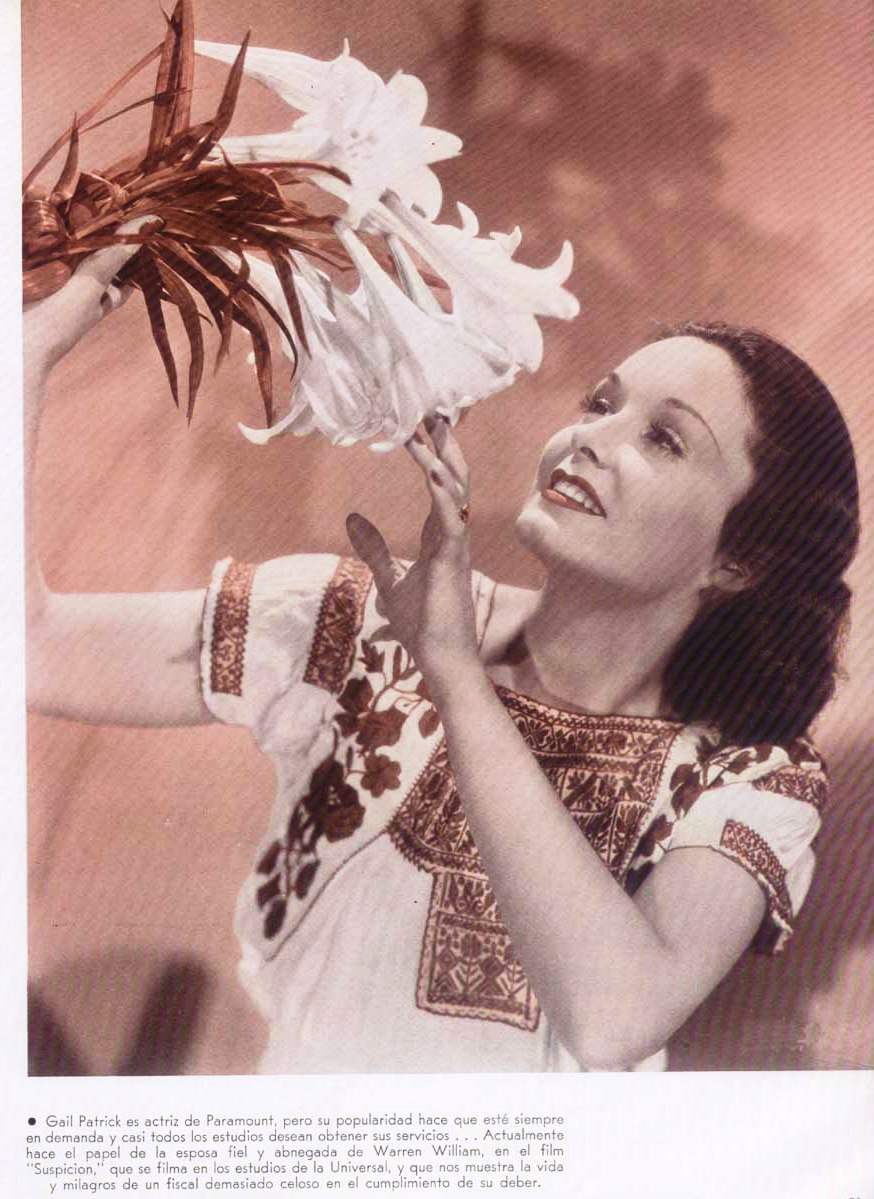
And ahh, Gail Patrick as Cornelia—have you written about her before? Must check ... dang! The search button produces results in the amount of zero! Well, I'm a Gail fan starting tonight ...
 That's the phenomenon known as "the hotter younger sister," which the fine, fine folks at Bright Lights After Dark wrote about at some length last year. As they so eloquently put it, "damn is she hot!"
Amen, brother.
 Born Margaret LaVelle Fitzpatrick in Birmingham, Alabama, Patrick was the dean of women at Howard College and was studying law at the University of Alabama when she entered a nationwide contest for a part in a Paramount film. She didn't win, but she was offered a film contract and moved to Hollywood.
Appropriate to a blog currently covering 1932-33, Patrick made her film debut in the 1932 film If I Had A Million, starring Gary Cooper, Charles Laughton and George Raft. She typically played arrogant socialites and femme fatales and is best known for three comedic roles—Carole Lombard's scheming sister in My Man Godfrey, a haughty wannabe actress who clashes with Ginger Rogers and Katharine Hepburn in Stage Door and Cary Grant's not-so-favored bride in My Favorite Wife.
 Patrick appeared in sixty-two movies between 1932 and 1948.
She abandoned acting when she married her third husband, literary agent Cornwell Jackson. One of Jackson's clients was mystery writer Erle Stanley Gardner who created the fictional defense lawyer Perry Mason. Patrick (credited now as Gail Patrick Jackson) obtained the rights to Perry Mason and for nine seasons produced one of the most successful television series in American history.
 Patrick died of leukemia in 1980 at the age of sixty-nine.
 The most elusive and enigmatic superstar in movie history, Greta Garbo is also one of the most recognizable, familiar even to those who have never seen one of her movies. Because the beautiful and talented Swedish import rarely granted interviews, retired early and lived the rest of her days in jealously-guarded seclusion, nearly everything we know about her, or think we know, comes down to us in the form of the perfectly-rendered, never-aging images she made iconic on the silver screen. To the extent that acting is a matter of invention, Garbo surely ranks as one of the greatest, since in a very real sense, she is purely a product of her own self-creation.
Of the two dozen Hollywood movies she made in a career that began with great fanfare in the waning days of the silent age and lasted until her sudden retirement in 1941, many movie fans and historians count her performance in Queen Christina as the best of her career. I count it as the best by a dramatic actress in 1932-33.
The Contenders
 Queen Christina may have been Garbo's best performance—to my mind, it was at the very least her first great performance after the introduction of sound—but the choice of Garbo as best dramatic actress of 1932-33 was hardly a clear-cut one.
Like Garbo, Barbara Stanwyck and Katharine Hepburn consistently turn up on lists of the ten best actresses in Hollywood history, and Kay Francis, though little remembered now outside a small but devoted band of followers, was at the peak of her career in 1932.
 Why, even Fay Wray, who isn't generally regarded as a great actress, made a vital contribution to the field, teaching a generation of damsels in distress how to scream—and scream she did. She screamed with her whole body, she screamed from her toes, and the horror genre has never been the same. Think about it: before 1927, it wasn't even possible to hear an actress scream in a movie, and before Fay Wray, it wasn't clear we were supposed to. Afterwards, we knew that the only proper response to being scared out of our wits was to scream, and nobody would ever do it better. So before we move on to talk about greater actresses in greater roles, let's stop to salute her contribution to movie history.
Done? Okay, let's keep moving.
 Barbara Stanwyck would have been a good choice for the top acting prize this year. The Bitter Tea Of General Yen and Baby Face are terrific movies, better than any movie at issue here aside from King Kong. The former, one of director Frank Capra's best, is the story of an American missionary (Stanwyck) who falls in love with a Chinese warlord (Nils Asther) and in the process confronts her own racism and hypocrisy. The latter, about a woman who sleep her way to the top, is the most deliciously cynical movie of the pre-Code era and helped usher in tighter studio censorship.
But while Stanwyck did some terrific work in the 1930s—these two pictures, The Miracle Worker, Stella Dallas—it's really her work in the 1940s that made her a legend and since she's a lock for two best actress awards, in 1941 (The Lady Eve, Ball Of Fire and Meet John Doe) and in 1944 (Double Indemnity), I'm going to risk the wrath of her loyal fans and bypass her this year.
 Likewise, Katharine Hepburn is one of the greatest actresses of all time—maybe the greatest—but I can think of at least five performances from the 1930s alone (Alice Adams, Stage Door, Bringing Up Baby, Holiday and even Sylvia Scarlett) that are more assured than the one she gave in Little Women. She's going to win two, three, maybe even four awards before we're done (assuming I live to be 140). I'm going to wait to recognize her accomplishments for a movie I really want to talk about.
 Finally, we have Kay Francis who in the space of a little over two months starred in three of the best movies of her career, Jewel Robbery, One Way Passage and Trouble In Paradise, a phenomenal run. In particular, One Way Passage is a splendid showcase of her abilities. The story of two people (Francis as a cancer patient, William Powell as a condemned criminal) who fall in love on an ocean voyage not knowing the other has little time to live, it's one of those magnificently stylish weepers that once upon a time Hollywood cranked out in its sleep. If you haven't seen it, get cracking—I highly recommend it.
That said, though, it's was Greta Garbo who gave the most moving performance of the year, and in many ways, the most iconic of her career. The vote may have been close, but when the final tally was read, it was Garbo's name at the top of the list.
Queen Christina: Great Performance, Flawed Movie
 As Queen Christina opens, Sweden is embroiled in midst of the Thirty Years' War, a destructive 17th century conflict that had its origins in the ongoing battle between Protestants and Catholics for control of central Europe. The country's beloved King Gustavus Adolphus has just fallen on the field of battle leaving his seven year old daughter to ascend to the throne. Raised as a boy and schooled in the arts of war (well, to the extent that a child can be), Christina tosses aside her regent's carefully-worded speech about "wag[ing] war with courage" and instead vows "to win it!"
In the next scene, it's years later and we see the grown up Christina (Garbo) in trousers and a man's hat riding astride a galloping horse through the forests on the palace grounds. To a modern audience, this scene might mean nothing, but in 1933 a woman in trousers riding astride rather than sidesaddle, these are signals that Christina has taken to heart the notion that to rule the country means ruling as a man. And indeed, by the standards of the day's cinema, she dresses like a man, argues like a man, and, it is implied when she kisses her lady-in-waiting on the lips, loves like a man.
 Despite Christina's skill and devotion as a leader, all is not well at home. The people clamor for more war, clamor for a royal marriage, clamor for an heir.
"In short," she says, "they clamor."
At the heart of the unrest is the desire that the queen should settle the question of the royal succession by producing an heir of Swedish blood, which of necessity requires her to settle on a mate, be it the handsome schemer Magnus or the aging war hero, cousin Charles. Christina sees marriage as a loss of her hard-earned freedom, a prospect that drives her to distraction.
"But majesty, you cannot die an old maid!"
"I have no intention to, Chancellor. I shall die a bachelor!"
 Fed up with demands of power, Christina disguises herself (as a man, always as a man) and spends a few days riding alone in the wintery countryside to clear her head. There, she stumbles across the Spanish ambassador (John Gilbert) and his entourage stranded in the snow. The ambassador, Antonio, mistakes her for an impudent boy—a conceit the filmmakers expect you to roll with since Garbo looks no more like a boy than Jean Harlow looks like Abe Vigoda—and the two wind up sharing a room in a nearby inn.
Not until Christina slips off her outer garments does Antonio finally tumble to the fact that he's in the presence of a beautiful woman.
(To read about Garbo's real-life romance with Gilbert, click here.)
It's the goofiest sequence in the entire movie, one that always has me itching to turn off the player, but it's followed by what is not only the best scene in the movie, but to me, the best scene in Garbo's illustrious career.
 Christina and Antonio have fallen into bed, no great surprise, but they've also fallen in love, an event so unexpected and new to both of them, they barely know how to express their joy and wonder. They recline sated before the fire, sharing a bowl of grapes and talking, but their spirits are soaring, and unable to contain herself, Christina finally gets up to wander around the room, as if first love were an out-of-body experience and she is following her soul around the bedchamber.
 The scene works because it pays such close attention to the emotion, particularly the melancholy that colors Christina's happiness. She wanders around the room, touching everything that Antonio has touched—a dresser, a candle, a spinning wheel—memorizing by touch and smell and sight every inch of the only room in which she has ever known complete happiness.
"In the future in my memory," she says, "I shall live a great deal in this room."
You don't have to be a monarch to appreciate just how fleeting time is or how rare moments of pure happiness are.
It's telling that, as she tours the room, she watches Antonio's image in the mirror, and his image in turn watches her, as if she is already viewing the moment in her memory, and feeling already the exquisite pain associated with an ideal past we can never revisit.
 It seems wholly appropriate to me that Garbo spends so much of the scene in front of both the mirror and, on the other side of the room, a religious triptych. Garbo was as much about images as she was about acting, holding poses that represent emotions rather than embody them from within, a style more akin to kabuki theater or the pantomime of the silent era than the Method approach actors have held to for more than fifty years. In that sense, Garbo's performance, like the triptych on the wall, is literally iconic—a pictorial representation whose form suggests its meaning. It's not "modern," but then when did we buy into the notion that "modern" and "better" were synonymous. In any event, I wouldn't want to throw out Garbo just because I also like Brando, any more than I'd throw out Rembrandt just because I also like Picasso.
In any event, as Christina feared, the moment is all too soon over. Antonio continues his journey to Stockholm, and she leaves by a different route to the same destination. Imagine Antonio's surprise when he discovers the woman he loves is a queen. Imagine the royal court's surprise when it discovers that their queen is in love with envoy of their enemy.
 The latter conflict sets in motion the final act of the movie. For the Protestant Christina to pursue a relationship with the Catholic Antonio after thirty years of war between those two faiths would be like Nixon bedding down with Brezhnev at the height of the Cold War. It's not simply xenophobia or self-interest that drives the opposition to the romance, it's a genuine horror at the idea of having to refight, both at home and abroad, an issue that was settled at the price of so much blood and treasure. Christina must choose between love and responsibilities. The way she chooses, and the consequences of her choice, lead to the most famous scene of Garbo's career, that final enigmatic shot that I won't describe except to say every film buff must see it.
 Now, I'm going to be up front with you: Queen Christina is one of the more problematic entrants in the Hollywood film canon. Even TV Guide in its glowing 5 (out of 5) star review describes the script as "great clumps of unleavened bread," which is a charitable way of saying that parts of the movie are preposterous—can anybody, for example, accept on the film's own terms the notion that John Gilbert could mistake Greta Garbo for a man? I don't care how dark that inn is or how mannish Garbo's clothes, unless Gilbert's character has an affinity for Swedish lads with rouged lips and plucked eyebrows, there's no way to watch that scene without thinking that either director Rouben Mamoulian set out deliberately to undermine his own movie or that the makeup man and cinematographer made some pretty grievous errors in professional judgment.
 Then again, many critics have suggested that that is the point. Historically, Christina was thought to be bisexual, Garbo was almost certainly bisexual, and Mamoulian was gay; perhaps without being able to say it explicitly during a time when even pre-Code permissiveness didn't permit a frank exploration of such things, Garbo and Mamoulian set out to investigate the limits of sexual orientation and wound up suggesting that, rather than being distinctly straight or gay, we reside on a sliding continuum between the two. And that, thus, in the right moment with the right person, even John Gilbert's Antonio could find himself attracted to a young Swedish lad on a cold, cold night.
Well, maybe.
Or maybe Garbo should have scrubbed off her makeup and cut her hair, ala Katharine Hepburn in Sylvia Scarlett, and really played the part instead of pretending to play it. But given the degree to which Garbo hid behind the mask of her perfect face and her professional mannerisms, asking her to strip all of that away and hang herself out there emotionally naked might have been as impossible as asking her grow wings and fly to the moon.
 Besides, did anybody ever argue that Tony Curtis, Milton Berle, Dustin Hoffman or Bugs Bunny should have made greater efforts to look like women when they played such in their movies? God forbid—the lack of illusion was half the joke.
Anyway, I suspect that I'm bringing 21st century expectations of "realism" to a 1933 movie and that an audience of the time, with the conceits of the silent era's cross-dressing comedies still fresh in their minds, wouldn't have expected Garbo to look like a man, but would simply have accepted the comic set-up and moved on.
I don't know.
What I do know is that when Queen Christina works, it works as well as any movie Garbo ever made.
"They usually ask me if it was easy or difficult to direct Garbo," Rouben Mamoulian said years later, "and the answer is that it was either easy or impossible. If she respected you as an artist, and if you gave her something that was better than what she had in mind, she was the easiest, most professional person to work with. In the case of Queen Christina she was simply marvelous."
A Troubling Pattern: Garbo In Eclipse
 Queen Christina premiered in New York the day after Christmas, 1933, with a nationwide release on February 9, 1934. Reviews were mixed. Mordaunt Hall of the New York Times wrote that Queen Christina was "a skillful blend of history and fiction" and that Garbo, "alluring as ever, gives a performance which merits nothing but the highest praise." Variety on the other hand, called the movie "slow and ofttimes stilted" and criticized Garbo's performance as "too often apace of the script's lethargy."
It turned out Variety knew American audiences better than Hall did. The film didn't perform well in the U.S. Garbo's sensibilities had always been foreign to American audiences, and while during the silent era that may have suggested a "desirable metropolitan European sophistication" (to quote Marcia Landy and Amy Villarejo writing in the BFI Film Classic study of the movie), by the time of the Great Depression, American audiences had become increasingly hostile to Garbo (and to her German counterpart, Marlene Dietrich).
 These same sensibilities, however, be they uniquely European or simply a product of Garbo's own matchless talents, helped make Queen Christina a big hit overseas where it made back twice its budget in Britain alone, establishing a pattern that would hold true for the remainder of Garbo's career. From Queen Christina forward through the end of her career, Garbo's movies made far more money overseas than in America, and more than any particular desire on Garbo's part, it was the outbreak of World War II, which closed off the foreign market, that hastened her early retirement from pictures. (After the war, Garbo sent out tentative feelers, thinking to make a comeback, but found no interest.)
Ironically, despite her waning domestic box-office appeal, with Queen Christina Garbo had hit her stride as an actress and would soon produce the best movies of her career, including Camille and Ninotchka. But we'll talk about those in their own good time.
[For a post on the production of Queen Christina, click here.]
Programming Note: Tuesday, August 24 is John Gilbert day on TCM and on the schedule is a showing of Queen Christina. Check your local listings and mark your calendar.


 From Turner Classic Movie's Now Showing magazine: