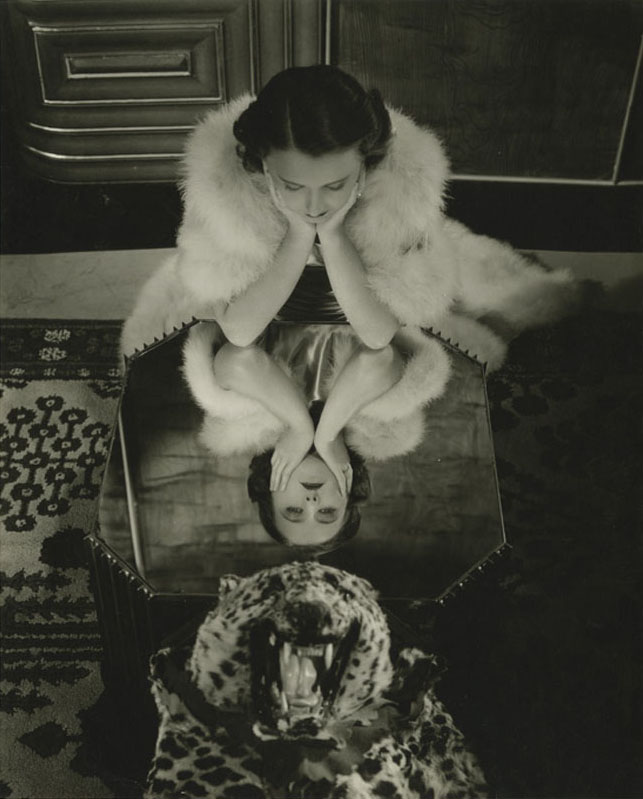
Can you imagine what a distorted picture of film history we'd have if the only Bette Davis movies that survived were Satan Met A Lady and Wicked Stepmother—if, say, Jezebel and The Letter had disintegrated in the can and Now, Voyager and All About Eve existed as only a damaged print in an archive vault somewhere?
That's about where we stand with regard to Norma Talmadge and our understanding of the silent film era.
I was up at 3 o'clock this morning with what Winnie the Pooh would call a rumbly in my tumbly (well, more like mild nausea—I've been eating my own cooking again) and wound up chasing Norma Talmadge through the misty maze of time. I'm working on a side project I haven't quite decided whether to call the Silent Oscars, the Mythical Monkeys or the Alternate Katies which would go back and hand out awards to movies from 1915-1927, and anybody who's ever attempted to study silent movies eventually runs up against the woeful state of films from that era. Oscar-winning director and enthusiastic film preservationist Martin Scorsese estimates that 80% of all American movies from that period are permanently lost—and lord knows how many that have been found are impossible for an average guy like me to see.
That state of affairs is particularly egregious with regard to Norma Talmadge. She was as highly regarded in her day as Lillian Gish but was a great deal more popular—thus leading someone (I forget who) to compare her to Bette Davis—but the fact is, very little of her work is available, just three DVDs, mostly featuring work from the days before she was a star. I've seen enough of Kiki, a comedy from 1926 co-starring Ronald Colman, to think I'll risk buying it on DVD. It also includes something called Within The Law, a melodrama more typical of her silent work.
Her two most highly-regarded films were Smilin' Through (1922) and Secrets (1924). A single print of the former is housed at the Library of Congress; incomplete prints of the latter are floating around, with at least a third of the film presumed lost. Neither are available on DVD or video.
Of her two talkies, the less said the better. I've seen the first, New York Nights, and she's fine but the movie is an incoherent mess—like so many movies from 1929, the director was dead set on inserting lousy songs where they don't fit and the result is a movie with no pacing and an uncertain narrative.
Worse is her last film, Du Barry, Woman Of Passion, and to say it was a disaster is an understatement. Allegedly, it inspired Jean Hagan's character in Singin' In The Rain—you remember her, don't you, the beautiful silent star who makes a fool of herself every time she opens her mouth. Although Talmadge did not display the thick Brooklyn accent of legend, she was ill-equipped for the long, florid speeches of a stage-bound costume drama and the movie was a flop.
"Quit pressing your luck, baby," wrote her sister Constance, who had retired without ever attempting a sound picture. "The critics can't knock those trust funds Mama set up for us."
Talmadge was the eldest of three acting sisters, born into poverty in New Jersey. Her father left one Christmas morning never to return but her mother, the indomitable Peg Talmadge, moved the family to Brooklyn and pushed her daughters relentlessly, finally scoring film work for Norma at Vitagraph Studios in Flatbush by sneaking past the guard at the studio gates. Norma was just sixteen.
Talmadge made hundreds of shorts at Vitagraph but didn't achieve much notice until starring in a 1915 anti-German propaganda piece called The Battle Cry Of Peace. Peg, Norma and sisters Constance and Natalie, soon moved to California where they landed contracts with D.W. Griffith, then the biggest name in Hollywood. Constance wound up the star of Griffith's Intolerance, but Norma didn't really come into her own until she married producer Joseph Schenck, who later produced Buster Keaton's best work (sister Natalie, in fact, married Keaton). She and Schenck formed the Norma Talmadge Film Corporation and promptly began turning out high-quality hits.
By 1921, Talmadge was the most popular actress in America. In 1927, she started a lasting tradition when she accidentally stepped into wet cement in front of the newly-constructed Grauman's Chinese Theatre.
Talmadge's marriage to Schenck took an odd turn in 1926 when while filming a silent version of Camille she began an affair with co-star Gilbert Roland. Schenck refused Talmadge's request for a divorce (this was long before the no-fault divorce laws of today), but continued to cast the couple together to take advantage of their box office popularity. Not until Talmadge began an affair with comedian George Jessel in 1934 did Schenck finally relent.
Crippled by arthritis, Talmadge lived out her retirement in seclusion and died of pneumonia in 1957.
Postscript: A picture of sisters Constance and Norma Talmadge:
The two best films of 1933 that unfortunately are not going to win any of my self-invented Katie awards are a pair of pre-Code Barbara Stanwyck classics, as different from each other in every respect except quality as two movies can get. I highly recommend you see both.
I've mentioned the term "pre-Code" many times and written about this period in Hollywood history at length here and here. In a nutshell, in order to stave off state and federal attempts to censor movies, Hollywood's studios issued a set of guidelines of what were unacceptable topics for the big screen. Without any enforcement power, though, the guidelines were more often than not honored in the breach, and in fact, New York's National Board of Review and the Catholic League of Decency had a far greater influence on the content of films than Hollywood's own Hays Office. Not until Joseph Breen took over the office in 1934 did Hollywood studios agree to enforce the Code.
Anyone who is a fan of pre-Code movies has in mind some actor or actress who personifies the era's permiss- iveness. For some it's Joan Blondell, for others it's Jean Harlow; still others prefer Miriam Hopkins, Kay Francis, Mae West, Clark Gable, James Cagney or even Norma Shearer. For me, though, Barbara Stanwyck more than any other performer, has come to personify in my mind the essence of the pre-Code era. Not only did she strip down to her skivvies in such films as Night Nurse, but she also displayed a fierce independence than always feels modern to me, even in the creakiest of film vehicles.
"It would be difficult to think of an actress so expressive of the early 1930s girl on the make," British film historian David Thomson has written, "as intimate, shiny, and flimsy as a discarded slip, but with eyes ever sly and alert."
Stanwyck rose quickly to stardom in the pre-Code era, primarily through the films of two great directors, William Wellman (Night Nurse, So Big and The Purchase Price) and Frank Capra, whose early films with Stanwyck included Ladies Of Leisure, The Miracle Woman, Forbidden and in the 1933 film, The Bitter Tea Of General Yen.
General Yen is the story of an American missionary (Stanwyck) who travels to China to marry her rather stuffy fiance only to wind up as the captive of a powerful warlord during the country's interminable civil war. At first, Yen (Nils Asther in the best performance of his career) holds Stanwyck in an effort to blunt the reformist zeal of Stanwyck's fiancé, but he soon finds himself falling in love with her.
Stanwyck, for her part, has a hard time reconciling her properly virginal upbringing with her growing lust for Yen, and in the process must confront for the first time in her sheltered life her own hypocrisy and prejudices. Her fevered dream in which she finds herself both menaced by and drawn to Yen is one of the most beautifully filmed sequences of Capra's illustrious career.
The film was a flop upon its initial release and Capra later dismissed it as "the only film in which I ever tried to become arty, because I was trying to win an Academy Award." The notion of a romance between a white woman and an Asian man shocked some and the picture played to protests around the country. "The women’s clubs came out very strongly against it," Stanwyck later said. "I was so shocked."
Even more shocking was Stanwyck's next film, Baby Face, one of the most notorious films of the pre-Code era. Written by Darryl F. Zanuck, who quit Warner Brothers shortly afterwards to form Twentieth Century Films, Baby Face was so racy that many scenes had to be re-shot and even then two version went out to theaters.
In Baby Face, Stanwyck plays Lily Powers, the daughter of an abusive saloon keeper who's been pimping her out since she was fourteen years old. She's inured to the humiliation—the look on her face as she realizes her father has just pimped her out is perfectly underplayed, as bored and blase as if he'd just read her the out-of-town baseball scores, but underneath seething with resentment—but she yearns for something better and is beginning to understand the power of her own sexuality.
In a key early scene that sets the tone, a powerful local politician puts his hand on Lily's knee, expecting to put his hand on a lot more than that. With barely a glance, Lily picks up a cup of coffee and casually dumps it on his hand.
"Oh, excuse me, my hand shakes so when I'm around you." When she later breaks a bottle over his head, he finally gets the message that this isn't foreplay.
With her only friend Chico (Theresa Harris), Lily leaves her father and hops a freight train—sleeping with a railroad cop to avoid arrest—and winds up in the big city where she ruthlessly sleeps her way to the top. (Among her conquests, look for a young John Wayne.)
Baby Face won no awards, but in 2005, the Library Congress included the film in the National Film Registry. If you're going to see it, make sure to track down the uncut version, which was for years thought lost then rediscovered in 2004. It's worth seeing both as a reminder that Hollywood didn't invent sex and sin in 1967, and as a pivotal moment in Stanwyck's career, being to my mind the moment she really became what we think of as "Barbara Stanwyck," with the impudence of Bette Davis, the independence of Katharine Hepburn, and the street smarts of Joan Crawford, only warmer, sexier and much less neurotic, respectively.
Within a year, the studios began to enforce the strict guidelines of the Pro- duction Code and Holly- wood wouldn't again make films with content as explicit and controversial as The Bitter Tea Of General Yen and Baby Face until the 1960s. Stanwyck herself shifted gears and found popularity playing the martyred mother in such films as Stella Dallas. Not until The Lady Eve in 1941 would she figure how to sell the public on a character as brazen as Lily Powers.
Trivia:The Bitter Tea Of General Yen was the first movie ever to play Radio City Music Hall in New York. Scheduled to run for two weeks, the theaters owners yanked the film after eight days despite having made back only $80,000 of the $100,000 rental they had paid the studio.
By now you've no doubt forgotten my list of nominees for best director of 1932-33 in the category of comedy or musical—an inevitable consequence of my leisurely working methods—and a pity that is, for a more distinguished list of directors you'll not find anywhere: Jean Renoir, Leo McCarey, George Cukor, Victor Fleming, Jean Vigo, Lloyd Bacon, any one of whom in another year would be a worthy winner. But for me, there was always just one choice, the one director who of all those on the list was at the top of his game in 1932-33, a man with a comedic touch so light, they named it after him.
I'm referring, of course, to Ernst Lubitsch who directed not one but two of the frothiest and funniest comedies of the pre-Code era, Trouble In Paradise and Design For Living. Not seen for decades—first thanks to Hollywood's self-censorship, later due to the vagaries of DVD marketing—these masterpieces of sparkling wit and easy sophistication are even now only just finding an audience, and Lubitsch himself is no longer as well-known as such classic directors as Alfred Hitchcock and John Ford. But in his day, he was the most famous director in the world and his influence is visible throughout the history of film, from Billy Wilder to Cameron Crowe.
"Lubitsch," said the great Jean Renoir, "invented the modern Hollywood."
I. From Berlin To America Born in Berlin in 1892, Lubitsch quit his father's successful tailoring business at the age of nineteen to join Max Reinhardt's theater company where he specialized in comedic roles. A year later, he began appearing in films and was soon writing and directing comedy shorts starring himself. He scored international hits in 1918 with a pair of Pola Negri vehicles, Eyes of the Mummy and Carmen, but really established himself in 1919 with The Oyster Princess, a farce about the excesses of the wealthy, punctuated by a manic foxtrot led by Curt Bois who later played the pickpocket in Casablanca.
Lubitsch followed up with a lavish costume drama, Madame DuBarry, again with Pola Negri, this time in the title role, and Emil Jannings as King Louis XV. This pattern of alternating comedies with costume dramas was one Lubitsch followed throughout the silent era, and during that time he was as much known for the latter as the former. Indeed, he received his first Oscar nomination for directing The Patriot, a biography of the mad Russian czar, Paul I, and never lost his fascination with exotic settings and the antics of the rich and powerful. (Alas, The Patriot, like so many silent movies, is now lost.)
In 1923 Hollywood's biggest star, Mary Pickford, invited Lubitsch to direct her next picture, Rosita. The resulting story of a peasant girl who becomes the object of a king's romantic obsession wasn't much to Pickford's liking, but the experience was still a positive one for the director. Lubitsch fell in love with America and but for two brief trips (including his honeymoon), he never returned to his native Europe. Instead, he relocated to Hollywood permanently and signed a lucrative contract with Warner Brothers that featured an unprecedented amount of control over his projects. Among the half-dozen pictures he made for Warners were two classics, The Marriage Circle and Lady Windermere's Fan. The latter, an adaptation of Oscar Wilde's comedy about a woman with a secret past, is one of five Lubitsch films preserved in the Library of Congress's National Film Registry.
Despite their artistic and critical success, however, Lubitsch's silent films failed to find the wide audience the Warner brothers had hoped for, and coupled with the films' high costs, Lubitsch consistently lost money for the studio. "Lubitsch had a following," said film editor Rudi Fehr, "but they weren't coal-miners, they weren't steelworkers." In a cable to his brother Harry, studio head Jack Warner stated bluntly, "Small directors [are] making twice [the] money he [is] making," to which Harry replied, "His pictures are over peoples' heads here."
Lubitsch bought out the remainder of his contract, made one movie at MGM—a charming, non-musical version of The Student Prince In Old Heidelberg, starring Ramon Novarro, Norma Shearer and Jean Hersholt—then finally landed at Paramount Pictures where he remained for the next twelve years.
Largely forgotten now, Miriam Hopkins was one of the sauciest actresses of the pre-Code age, excelling in light comedies and lurid melodramas alike and nabbing an Oscar nomination along the way. Her early sound movies are some of the best of the era, yet often proved too scandalous to be re-issued once censors began taking scissors to Hollywood's past. Coupled with the years lost while she languished on the McCarthy-era blacklist, and even film fanatics can admit to having rarely seen her work.
That's a situation we here at the Monkey will try to correct.
Hopkins was born in Savannah, Georgia, and grew up in a small town on the Alabama border, but she was acting on the Broadway stage by the age of eighteen with her turn in the stage adaptation of Theodore Dreiser's An American Tragedy in 1926 really making audiences sit up and take notice for the first time. She made her feature-film debut in the 1930 comedy Fast and Loose, and within a year turned in two of her best film performances, in Ernst Lubitsch's musical comedy The Smiling Lieutenant and Rouben Mamoulian's adaptation of the Robert Louis Stevenson horror classic, Dr. Jekyll and Mr. Hyde.
In the first of these, Maurice Chevalier plays a randy lieutenant in the Austrian army who beds down with an equally randy violinist played by Claudette Colbert. (Her band's name? "The Viennese Swallows." Ahem.) The two make beautiful music together, literally and figuratively, until by accident, Chevalier finds himself mistakenly flirting with a visiting princess—the prim, virginal Hopkins—instead of Colbert, threatening an international incident.
"When you winked at my daughter," asks the king, "were your intentions honorable?" "They were," says the lieutenant. "Well, then naturally you'll marry her." "My intentions were dishonorable!" the lieutenant says quickly. "Then you'll have to marry her!"
Hopkins's princess is as naive as Colbert is worldly, and when a marriage is hastily arranged, she has no clue what to do with her unwilling husband. For his part, Chevalier can't wait to get back to Claudette Colbert.
Variety in a contemporary review praised Hopkins as the more experienced Colbert's equal, while eighty years later Dan Callahan noted, "Hopkins gives an expertly timed comic performance as plain-Jane royalty with Princess Leia buns on her ears who makes a play for Chevalier."
By the way, those looking for an example of the "Lubitsch touch" need look no further than The Smiling Lieutenant. On the royal couple's wedding night, a manservant and maid prepare the bedchamber—the man puts two pillows on the bed, the maid studies the arrangement, then moves the two pillows together so they're touching; the man looks it over, thinks a moment, then plops one pillow on top of the other. The man and woman look at each other, smile knowingly, then declare the royal bed ready.
All quite clean yet oh so dirty and served up without one extra word, glance or gesture. That's the Lubitsch touch.
A movie fan of today who knows Hopkins's pre-Code work waits a little impatiently for the princess to bust out—knowing that when she does, it'll be worth it. But an audience of the time, not knowing Hopkins and what she was capable of, must have found her transformation from a prudish virgin to a cigarette-smoking, jazz-playing temptress just as shocking as Chevalier's lieutenant does.
It's a fun movie, loaded with double entendres and sexy situations, served up with the director's typically light, frothy style. I tell you, it's as bracing and intoxicating as cold champagne.
Hopkins followed up her success in The Smiling Lieutenant with Dr. Jekyll and Mr. Hyde, a movie that is the polar opposite of Lubitsch's comedy in every sense but quality. Both pictures received Oscar nominations, the former for best picture, the latter for actor, cinematography and screenplay.
The basic outline of Dr. Jekyll and Mr. Hyde is familiar to us all—a scientist drinks a potion that turns him into a murdering beast with hairy hands and bad teeth. What tends to be forgotten is the why. Dr. Jekyll (here pronounced with a long "e," as in "gee whiz" rather than the familiar rhyme with "heckle") is striving for the perfectability of man, using science to distill out our bestial dark side, freeing the angels of our better nature to pursue more virtuous callings.
As in the other great horror picture of 1931, Frankenstein, the hubris of playing God leads to disaster.
Here, Hopkins plays Ivy Pearson, saloon singer, prostitute, and physical embodiment of Jekyll's base desires. The character is not in the novel, but is so perfect, you wonder why not. Taking full advantage of the pre-Code era's permissiveness, there's no question that Ivy is a prostitute and Hopkins doesn't try to soften her. Her Ivy is both lovely and—what is the word?—skanky at the same time. Her play for Jekyll is coarse and obvious, pulling up her skirts to show her legs, offering to be his slave. Even the priggish and pompous Jekyll feels the pull of the animal, and his shame is what drives him to try to cleanse himself of his base nature, resulting in the experiments that divide him.
That's the flaw, by the way, in the great Ingrid Bergman's performance as the same character in the 1941 remake. Her Ivy may live in low economic circumstances, but Bergman can't convince us that even on her worst day she was ever low or common, and thus Jekyll's revulsion at himself for wanting her makes no sense. But Hopkins? Well, she's very convincing as someone who'd inspire you to both sleep with her and then scrub yourself with lye soap and a wire brush afterwards, so different from the prim and proper princess of The Smiling Lieutenant you wonder that it's the same actress.
When Dr. Jekyll and Mr. Hyde was re-released just five years later, by the way, it required eight minutes of cuts to satisfy the stringent requirements of the Production Code and the best of Hopkins's performance wound up on the censor's cutting room floor. It was decades before audiences would rediscover Hopkins in the restored print.
After the triumphs of 1931, Hopkins would top herself in two more Lubitsch comedies, Trouble in Paradise, in which she plays a con artist who teams up romantically and professionally with Herbert Marshall's master thief, and Design For Living, in which she scandalously resolves a love triangle with Fredric March and Gary Cooper by living with them both.
Even more scandalous was 1933's The Story of Temple Drake. Based on William Faulkner's novel Sanctuary, the story of a flighty debutante's rape proved so shocking, it was banned in many states; Joseph Breen, who succeeded Will Hays as the head of the Production Code Office, later ordered it withdrawn from circulation and it remained unseen for decades.
In 1935, Hopkins received her only Oscar nomination, for playing the conniving title character in Becky Sharp. Being a fellow Georgian, she was Margaret Mitchell's choice to play Scarlett O'Hara in Gone With The Wind, but of course it was David O. Selznick's opinion that mattered.
Despite her success on screen, Hopkins was not well-liked by her Hollywood peers and she bounced around several studios in a short number of years. She had several well-publicized battles with Bette Davis on the sets of The Old Maid and Old Acquaintance, Davis later declaring, "Miriam Hopkins was a bitch!" (That Davis was having an affair with Hopkins's husband, Anatole Litvak, was no doubt a primary cause of the friction.) Hopkins also disdained Hollywood society, preferring the company of writers such as William Faulkner, Theodore Dreiser and William Saroyan. And even her sympathetic biographer Allan Ellenberger admits she had a volatile temper, waging on-set and behind-the-scenes battles with producers, directors and co-stars alike. She was also well-known for her eccentricities, for example, always consulting a psychic before accepting a new role, leading her to turn down the lead role in Frank Capra's It Happened One Night, a part that won Claudette Colbert an Oscar, proving once and for all that the stars may control our fates but they don't know a damn thing about the movies.
Hopkins grew in- creasingly unpopular as the decade wore on—in 1940, the Harvard Lampoon dubbed her "the least desirable companion on a desert island"—and she retired in 1943. She didn't appear in another movie for six years, then made her comeback in The Heiress as Olivia de Havilland's aunt, a performance the Golden Globe awards recognized with a nomination for best supporting actress. In 1952, however, Hopkins was accused of being a Communist sympathizer and again she was out of the movies, this time for nine years.
In all, Hopkins made only thirty-three movies in her career, twenty-two of them by 1937.
Hopkins launched yet another comeback in the 1961 film, The Children's Hour, playing Shirley MacLaine's ditsy aunt to good reviews. (Coincidentally, Hopkins had played the MacLaine role in the first film version of Lillian Hellman's play in 1936 when it was produced under the title These Three.)
Hopkins also did a lot of television back when that meant appearances in live theater productions on shows such as Studio One and Lux Video Theater. She continued to work almost up to her death of a heart attack in 1972.
I have a drop-dead lawyer-business deadline tomorrow so of course I've been watching movies. I've got two unrelated projects going at the moment: the essay for best supporting actor of 1930-31 (which you know about) and an ongoing project to flesh out my knowledge of Silent Era movies, some of the results of which I hope to share with you around the time I finish writing about the best movies of 1933—which at my current pace might be around the time my six year old niece graduates from college.
In the meantime, in honor of Halloween this weekend, I thought I'd mention an unusual vampire movie I saw yesterday, A Fool There Was, directed by Frank Powell in 1915.
It stars Theda Bara as "The Vampire." You remember Theda Bara, don't you? She was Hollywood's hottest sex symbol for a brief time in the late 1910's, most famously appearing in 1917's Cleopatra wearing, well, not much.
A Fool There Was, based on a Rudyard Kipling poem of all things, begins well enough. Bara, decked out in 1915's version of the nine's, sets her eyes on a wealthy American diplomat, played by Edward José (no, I'd never heard of him either. Primarily a director, he did occasionally step out from behind the camera, starring in, for example, The Perils Of Pauline), rearranging her schedule to travel on the same trans-Atlantic steam ship with him, seducing him in route.
And then the movie turned into the poor man's Pandora's Box, with the young and wild Theda Bara taking full advantage of the diplomat, spending his money, ruining his career, separating him from his family and his self-respect. And it slowly dawned on me that Bara wasn't so much a "vampire" as a "vamp," in Merriam-Webster's description, "a woman who uses her charm or wiles to seduce and exploit men."
The word "vamp" in this sense (it's also part of a shoe) is a shortened form of the word "vampire," and as a metaphor for a woman who sucks a man dry, it largely comes from this movie and Theda Bara.
You probably would have figured that out long before I did. But there you have it.
Theda Bara, by the way, was thirty when she hit it big in Hollywood, and she lived a long time, but her career didn't. The public ate up Bara and then by 1919, spit her back out again, hungry for the next big thing, tired of Bara's broadly-played "vamp" roles.
It didn't help that the public routinely confused the parts Bara played with Bara herself and women in particular took such an intense dislike to her that they were known to call the police if she spoke to their children. In fact, she wasn't much of a vamp in real life if her marriage to Charles Brabin is any indication. They were married in 1921 and stayed married until Bara's death in 1955 did them part.
"I have the face of a vampire," she later said, "but the heart of a feminist."
As for her professional abilities, it's a hard question to assess now. Nearly all of her films were destroyed in a studio fire in 1937, including her greatest triumph, Cleopatra, of which only a forty second fragment remains. I tracked down A Fool There Was simply to see something of Bara's legend for myself, but made as it was before D.W. Griffith's groundbreaking The Birth Of A Nation, which practically invented what we think of as a motion picture, A Fool There Was plays like a well-meaning amateur's home movie and with its static direction and simplistic characterizations, there really was no acting on Bara's part to be done.
You may want to check it out as I did, to satisfy your curiosity.
If the Academy of Motion Picture Arts and Sciences handed out an Oscar in the category of "What Were They Thinking?" 1929's hands-down winner would have been Queen Kelly. In fact, this production was so misconceived and ill-executed, the Academy would have had to retire the award immediately afterwards, for everything that followed would have been mere anticlimax.
Queen Kelly's director—at least to start with—was Erich von Stroheim, and as soon as you see the name Erich von Stroheim attached to a project, you know there's going to be more drama going on behind the camera than ever appears in front of it. Gene Siskel, the late film critic for the Chicago Tribune, often said his criterion for judging a movie was whether it was more interesting than a documentary of the same actors having lunch. It's a hard question to answer in this case: from all reports, the director and his stars were too busy fighting to eat any meal together.
Ostensibly, Queen Kelly is the story of a young prince (Walter Byron), who on the eve of his wedding to the mad Queen Regina (Katie nominee Seena Owen), meets a naive young schoolgirl (Gloria Swanson) and falls hopelessly in love. When the queen discovers the prince's betrayal, she takes her revenge including, in von Stroheim's original vision, exiling the schoolgirl to work in an East African brothel. (The movie took its title from this last twist—the schoolgirl, named Kitty Kelly, was to have eventually become the brothel's madam, it's "queen," so to speak.)
It's really the story, though, of unchecked egos and terrible decision making, leading ultimately to an unfinished, virtually-unseen movie that has developed an undeserved reputation as one of Erich von Stroheim's lost masterpieces.
As the mo- tivating force behind this project, star Gloria Swanson deserves a lion's share of the blame for its failure. She convinced her married lover, Joseph P. Kennedy, to bankroll the movie, picked the overmatched Walter Byron as her co-star, and then cast herself in the title role. Swanson was thirty at the time and is, to put it bluntly, ridiculous as the naive teenage girl living in a convent school.
Worse, she chose von Stroheim to write and direct the movie, and then gave him part ownership of the film and control of the final cut of any U.S. release. Given that von Stroheim had a well-known penchant pouring extravagant amounts of money into uncommercial nine hour movies, perhaps Swanson should have known what she was letting herself in for.
This doesn't even address the fact that they were making a silent movie well over a year after the release of The Jazz Singer.
Without a finished script in hand, principal photography began on November 1, 1928, and it became clear to Swanson on day one that von Stroheim was making up the movie as he went along. In fact, she predicted after the first day's shooting that the movie would never be finished. How right she was.
If my in- formation is correct, the first scene von Stroheim shot was the initial meeting between the prince and the schoolgirl, and let me tell you, this was no ordinary "meet cute"—while hiking with school friends, Swanson's underpants fall off as the prince rides past on horseback, and naturally, he snatches them up and gives free rein to what must have been movie history's first panty sniffing fetish. Wow! And von Stroheim got more and more out there. In addition to the panty sniffing, he gives us arson as a conversational gambit, a whip-wielding queen, and, of course, the promise of a second act brothel setting and a minimum four-hour running time.
This inability to rein in any impulse—legend has it that the prostitutes who accompany the prince in an early scene were played by real prostitutes, recruited from the best brothel in Hollywood—was typical of von Stroheim, and Swanson realistically had no choice but to fire him, which she did at the end of January 1929. The film was only half finished.
Two years later, Swanson hired cinematographer Gregg Toland to shoot a truncated ending to the film and although von Stroheim's contract barred Swanson from showing this version in the United States, it was released in Europe in November 1932. A partially restored version of the unfinished film was finally released in the United States in 1985.
Like many movies of that time that no one had actually seen, it's reputation grew until it was regarded as von Stroheim's lost masterpiece, on par with the "butchered" nine-hour version of Greed. When it finally surfaced, it proved not to be quite what people had convinced themselves it was.
Auteur theorists love von Stroheim for the mad passion of his vision, but to be honest, the guy was probably nuts. He was certainly an egomaniac and I think the notion he was a genius derailed by the crass concerns of the studios is essentially a false one. He made pretty pictures, but he wasn't a sharp thinker—he was one of those guys (like a law clerk I knew, way back when) who if you asked him the time, would build you a clock.
Judging from what survives, the end product, here and elsewhere, didn't justify von Stroheim's means.
Trivia: To stand in as an example of the kind of silent movies Norma Desmond made, Billy Wilder used a scene from Queen Kelly (Swanson praying among an array of flickering candles) in his classic Sunset Boulevard.
Jeanne Eagels, who starred in the 1929 production of The Letter (later remade in 1940 with Bette Davis), was the first actor to be posthumously nominated in Oscar's history. She had died in October 1929 of a heroin overdose, six months prior to the Academy Awards ceremony. She was 39.
Kathryne Kennedy, her co-star in the Broadway production of Somerset Maugham's Rain, said of Eagels, "I sincerely doubt if Jeanne Eagels really knew, in spite of her pretensions, that she was a great actress. She was. Many times backstage I'd be waiting for my entrance cue and suddenly Jeanne would start to build a scene, and [we] would look up from our books at once. Some damn thing—some power, something—would take hold of your heart, your senses, as you listened to her, and you'd thrill to the sound of her."
Eagels was well-enough known that the character Addison DeWitt (George Sanders) says of her in All About Eve that seeing her on stage for the first time was one of the two greatest moments of his life.
Her own assessment? "I'm the greatest actress in the world and the greatest failure. And nobody gives a damn."
In 1957, she was the subject of a very fictionalized account of her life, Jeanne Eagels, starring Kim Novak in the title role.
Despite an Oscar nomination for best actress, very little of Eagels's film work survives. The Letter exists only as a 35mm work print with no sound other than dialogue and is unavailable on VHS or DVD. A couple of her silent movies survive in truncated form. Her second talkie, Jealousy, and the other five films of her nine film body of work, have been entirely lost.
Not a very satisfying memorial for an actress of her reputation.
It's quite possible that the best sup- porting per- formance of the year was turned in not by my choice (who I will not reveal just yet) but by Lewis Stone, remembered now mostly for his recurring role as Judge Hardy in the Andy Hardy movie series (or perhaps for speaking the famous final line of Grand Hotel: "People come, people go. Nothing ever happens.").
But Stone was also a very fine character actor and he received his only Oscar nomination in 1928-29 for his performance in the Ernst Lubitsch movie The Patriot. For contemporary accounts, Stone's role was probably more of a supporting one (the Oscars didn't distinguish between lead and supporting performances back then) and if it's as good as people eighty years ago thought it was, he'd be a very good choice for the Katie Award for best supporting actor.
Unfortunately, like many silent films, The Patriot long ago vanished, leaving only a few fragments and it's impossible to tell from the trailer I've posted here, which focuses on the lead actor, Emil Jannings, what Lewis Stone did that so enchanted audiences and critics alike.
Jannings, as you may recall, won the first Oscar for acting but in this trailer at least, he serves up more ham in three minutes than you'd find in one of those two pound sandwiches at the Carnegie Deli. As for Stone, except for a single mention, the trailer ignores him completely.
And while you might be okay with giving an award for a performance you have never and will never see, Katie-Bar-The-Door doesn't put up with that sort of nonsense and I answer to her, not to you. So I had to pass on Stone and The Patriot.
I gave serious thought to shoe-horning Lewis Stone into the award for his supporting performance in A Woman Of Affairs, the third movie pairing of Greta Garbo and John Gilbert, and the first of seven movies Stone made with Garbo. Stone was quite good in the thankless role of the family doctor and friend who stands around being wise while everyone behaves like a jackass, good enough to earn at least a nomination.
But in the end, the preposterous nature of the story, about a woman who destroys herself and everyone around her to protect the reputation of a man hardly worth protecting, undermines Stone's effort, leaving him hanging, as they say, like an elephant on a clothesline.
Stone starred in another Garbo movie in 1929, Wild Orchids, in which he plays a cuckolded husband who gets his revenge while on a tiger hunt with a Javanese prince. The New York Times called his performance "splendid," others have called it "solid," but quite frankly the story is even dumber than the one in A Woman Of Affairs (and I like Garbo). So a nomination for Stone, admiration for a long career that covered nearly forty years and a hundred and fifty movies, but no Katie.
Also missing in action, thanks to Hollywood's shoddy treatment of its own past, is Reginald Owen in The Letter. Readers of my generation may remember Owen best as Admiral Boom in 1964's Mary Poppins, but he was also a hard-working character actor and always worth a look come award time. Unfortunately, as I will discuss at greater length when I write about the brief life of Oscar-nominee Jeanne Eagels, The Letter is partially lost and what is left sits in a film archive, unavailable for viewing except for rare exhibitions—which is my way of saying I haven't seen it and am not likely to anytime soon.
Another possible nominee was veteran character actor Gustav von Seyffertitz for his role in Greta Garbo's The Mysterious Lady, but in the end his sole mode of acting, a holdover I suppose from the Silent Era, is to glower. He juts out his long, granite chin, beetles his eyebrows and glowers angrily. And then when watching other von Seyffertitz performances, I began to realize he glowers a lot. Like all the time. He was Hollywood's go-to guy for glowering. You want to hand out an award for glowering, von Seyffertitz was your man (okay, I like the word "glower"), but you want an actor with a bit of range, you look elsewhere.
I also considered Donald Calthrop who plays a twitchy little weasel in the first Alfred Hitchcock talkie, Blackmail. He's pretty good in it, but overall, it's not one of Hitchcock's better efforts and given that Hitchcock and his oeuvre will wind up being well-represented during the course of this blog, I didn't see any need to make more of Calthrop's performance than it deserves.
Which to my mind leaves two major contenders for the prize of best supporting actor of 1928-29, Ernest Torrence in Buster Keaton's comedy classic, Steamboat Bill Jr., and Wallace Beery in the movie that vaulted Louise Brooks to the first rank of American silent actresses, Beggars Of Life.
I'll talk about both of them in my next post and then bless one of them with a coveted Katie.
Those of you with sharp eyes and long memories are no doubt scratching your heads to see Anita Page listed here as the best supporting actress of 1928-29. Didn't I choose Olga Baclanova in Docks of New York that year? Well, yes. Yes, I did. But because of a technical glitch we in the trade call "changing my mind," I'm going back in time and choosing Anita Page instead.
The fact is, Anita Page's performance in Our Dancing Daughters still resonates for me nearly a year later whereas Olga Baclanova, despite a fine effort, has pretty much slipped the surly bonds of my memory, the only Katie winner I can say that of.
Moreover, Page's performance resonates with other movie fans as well, showing up more often on other "Alternate Oscar" lists than any other actress in the mythical supporting category for 1928-29 (supporting performances wouldn't be officially recognized until 1936).
Anyway, I have cobbled together a short essay about Anita Page from everything I've written about her over the course of the year and substituted it for the original essay on Best Supporting Actress of 1928-29, leaving the original essay about Olga Baclanova as an addendum.
Sue me.—The Mythical Monkey (2/10/10)
I have to confess, before I started writing this blog, I had never heard of Anita Page, but now that I've seen half a dozen of her movies and read a bit about her, it's clear that she was just as cute as the proverbial bug's ear and no doubt somebody you would have been lucky to know. Certainly Herschel House must have thought so—the Navy pilot was married to her for fifty-four years, until his death in 1991.
Mostly Page played sweet innocents who found themselves in a melodramatic load of trouble (see, for example, Our Modern Maidens), but her turn in Our Dancing Daughters as a self-absorbed, gold-digging be-yotch who tricks Joan Crawford's millionaire boyfriend into marrying her was unforgettable and should have presaged a longer career. Louis B. Mayer, a warped frustrated old man, and Irving Thalberg, a warped frustrated young man, saw to it that it didn't.
Well, you take what you can get.
Our Dancing Daughters was the first movie written specifically for Joan Crawford and it made her a star. It's the story of a rich, wild girl (Crawford) with an addiction to short dresses and the Charleston who loses the love of her life to an even richer, wilder girl (Page, also in a star-making role), all while soaking up Jazz and bootleg booze in fabulous art Deco palaces that could only have existed on the set of an MGM movie. None of this is meant to be taken seriously—just another Hollywood studio clucking its tongue at girls gone wild even as it exploited the phenomenon to rake in box office bucks.
What's not to like?
Although she had only just celebrated her eighteenth birthday when the movie hit the theaters, Page is absolutely convincing in her ruthless pursuit of the man, first putting on an act of virginal innocence to entice him then exploiting him to the hilt after she lands him.
In the movie's penultimate scene, Page is drunk, evil and standing at the top of a staircase. No prizes for guessing what happens next.
"Our Dancing Daughters was my picture," she said years later. "I say that because I did the acting. Joan Crawford danced her way through it. I acted my way through it." Our Dancing Daughters was one of a series of Hollywood movies seeking to both exploit and condemn the Jazz Age flapper phenomenon. The script called for an undercurrent of tension between Page and Crawford and, boy, is there ever. Years later, Page claimed Crawford physically assaulted her on the set but the mutual hatred didn't hurt their on-screen chemistry any. In fact, despite their mutual loathing, Page and Crawford made two more movies together, Our Modern Maidens and Our Blushing Brides, trading the good girl/bad girl roles back and forth, to great commercial, if not artistic, effect.
Page also starred in the year's Oscar winner for best picture, The Broadway Melody, and received over ten thousand fan letters a week, including nearly a hundred from fascist dictator Benito Mussolini who was infatuated with the young actress.
"Are you starting to believe your own publicity?" director Harry Beaumont asked Page during the filming of one of their six pictures together.
"Of course," she said, "Aren't you?"
Our Dancing Daughters is one of those odd silent-sound hybrids of the very early sound era. Made not long after The Jazz Singer, the film has a soundtrack, including several prominently featured songs, but no dialogue, only title cards. I actually find this approach preferable to early talkies such as The Broadway Melody where, for example, Anita Page's dialogue competes with the rustling of her own dress.
Fortunately, sound technology improved rapidly over the course of a year.
MGM's The Broadway Melody, billed as the first "all-talking, all-singing, all-dancing" musical, was the top grossing movie of 1929 as well as the first sound picture to win the Academy Award for best picture, and further cemented sound's commercial future. The Broadway Melody was the top box office movie of 1929 and also featured "You Were Meant For Me" and "Give My Regards To Broadway."
Douglas Shearer out of necessity invented the concept of the "playback"—pre-recording a song that performers would then dance and lip-synch to—when the choreography on a huge dance number that had already been performed and recorded was deemed unsuitable. Rather than bring the orchestra back to the sound stage, Shearer figured out how to reuse the sound from the previous take, and the cast performed the dance number with its new choreography to a playback of the song. This technique became the industry standard for decades.
"I thought Our Dancing Daughters was my picture," she said later, "but Broadway Melody was Bessie Love's. I love good English, and I hated saying things like, 'Gee, ain't it elegant?' In my opinion, silents were much better than talkies. One thing you could have was mood music, which you could have playing throughout your scene to inspire you. The trouble with talkies was, they let you have the music, but they'd stop it when you had to talk, and that was always a let-down for me."
After The Broadway Melody, Page made two more movies with Joan Crawford, and appeared in films with Lon Chaney, Buster Keaton and Clark Gable.
Her final movie for MGM was 1932's Prosperity, starring Marie Dressler and Polly Moran. On the outs with studio head Louis B. Mayer after twice refusing to sleep with him (the second proposition made in the presence of Page's mother), Page served out the remaining years of her MGM contract on loan to poverty row studios, making such low-budget bombs as Jungle Bride and Hitch Hike To Heaven. It was an ignominious end for an actress who just a couple of years before had been second only to Greta Garbo as the studio's top draw.
Page left Hollywood and married Navy flyer Herschel House in January 1937. After his death, she began to make films again, mostly low-budget fare such as The Crawling Brain and Witchcraft XI. On the 75th anniversary of the founding of the Academy of Motion Picture Arts and Sciences, Page received a standing ovation at a special screening of The Broadway Melody. She was last surviving attendee of the first Oscar ceremony and died in 2008 at the age of ninety-eight.
(Original essay follows): For the best supporting actress award, I've nominated a trio of superficially similar actresses—each blonde, beautiful, at the peak of their careers in 1928 or 1929, two playing hookers, the third playing a heartless gold digger—but who arrived on and departed from the Hollywood stage by very different paths. All of them turned in tiptop performances during what proved to be the last year when silent movies still had an outside chance of finding an audience and I'm sorry their careers, which cracked up for a wide variety of reasons, weren't longer or more celebrated.
The most visible of the bunch, at least at the time, was no doubt Anita Page whom I've nominated here for her performance as a gold digger who tricks Joan Crawford's millionaire boyfriend into marrying her in the Jazz Age flapper picture, Our Dancing Daughters. Although she had only just celebrated her eighteenth birthday when the movie hit the theaters, Page is absolutely convincing in her ruthless pursuit of the man, first putting on an act of virginal innocence to entice him then exploiting him to the hilt after she lands him.
In the movie's penultimate scene, Page is drunk, evil and standing at the top of a staircase. No prizes for guessing what happens next.
Our Dancing Daughters was one of a series of Hollywood movies seeking to both exploit and condemn the Jazz Age phenomenon of young girls gone wild. The script called for an undercurrent of tension between Page and Crawford and, boy, is there ever. Years later, Page claimed Crawford physically assaulted her on the set but the mutual hatred didn't hurt their on-screen chemistry any. In fact, despite their mutual loathing, Page and Crawford made two more movies together, Our Modern Maidens and Our Blushing Brides, trading the good girl/bad girl roles back and forth, to great commercial, if not artistic, effect.
Page also starred in the year's Oscar winner for best picture, The Broadway Melody, and received over ten thousand fan letters a week, including nearly a hundred from fascist dictator Benito Mussolini who was reportedly infatuated with the young actress.
"Are you starting to believe your own publicity?" director Harry Beaumont asked Page during the filming of one of their six pictures together.
"Of course," she said, "Aren't you?"
On the other hand, the least visible of my trio of nominees was Mary Nolan—and apparently she wanted it that way. Earlier in the decade Nolan, whose real name was Imogen Robertson, had been a Ziegfeld girl performing under the stage name "Bubbles Wilson." But she had the misfortune to fall in love with married comedian Frank Tinney who routinely abused her and finally beat her so savagely, she landed in the hospital.
She also landed in the tabloids, which battered her reputation nearly as savagely.
Robertson/Wilson fled the United States, and after two years working in the German film industry, returned to work under the name Mary Nolan. In Tod Browning's West Of Zanzibar, she plays a victim as ill-used as Nolan was in real life. Lon Chaney is crippled in a quarrel and takes revenge on Nolan, believing her to be the child of his late wife and her lover, not realizing she is in fact his own flesh and blood. First he forces Nolan to work in a brothel. Then he arranges for cannibals to burn her alive. Then he really gets mad.
Either of these actresses would be fine choices for a Katie but I'm reserving the award for the third beautiful blonde in this trio, Olga Baclanova, who co-starred in one of the best movies of the year, Josef von Sternberg's The Docks Of New York.
You might recall that I mentioned her as a potential supporting actress nominee for 1927-28 for her performance as a kinky countess with a fetish for the disfigured Conrad Veidt in The Man Who Laughs. In The Docks Of New York she plays Lou, an abandoned wife making ends meet as a prostitute in a waterfront bar.
Two of Hollywood's most successful writers, Jules Furthman and John Monk Saunders, wrote this story in the style of Eugene O'Neill, with all the action taking place in one evening and the following morning. A sailor on shore leave (George Bancroft) pulls a suicidal young woman (Betty Compson) out of New York's harbor and over the course of an evening, takes a liking to her and proposes marriage.
It sounds like the stuff of Hollywood fantasy, an early stab at Pretty Woman, say, but everyone involved handles the story soberly and realistically and the movie reminds me more than anything of O'Neill's Anna Christie which would be adapted the following year as a vehicle for Greta Garbo's first talkie. Baclanova in particular breathes life into what could have been a stock character, playing Lou as a hardened cynic when plying her trade in the dive bar that sees most of the movie's action but as a beaten down survivor in private, defeated and without illusions.
"Do you think he can make you decent by marryin' you?" she asks Compson after hearing of Bancroft's proposal. "Until I got married, I was decent!"
Lou surprises herself and us with a pivotal act of violence in the film's third act that reveals just how much her estranged husband's thoughtless cruelty still hurts her.
Soon after this film, director von Sternberg would enter into the cinematic (and personal) relationship for which he is best remembered, the six films he made with Marlene Dietrich. These movies, while highly-regarded by cinephiles and showcasing some of Dietrich's best work, were increasingly characterized by wretched excess and a voyeuristic interest in Dietrich (Literally. In The Scarlet Empress, for example, the royal wedding night consists of the groom watching the bride through a peephole) that's inaccessible to most audiences.
While The Docks Of New York is not as visually interesting or cinematic as von Sternberg's later work, it's more moving and from my perspective more worthy of attention. Here, the director was still in touch with the needs and interests of his audience, still trying to tell a story, still trying to connect with real universal human emotions. I think it's possibly the best work of his career.
As for Baclanova and my other nominees, all three were pretty much out of the movies by 1936.
Anita Page, who only just passed away last year at the age of 98, said late in life that her career was unfairly sabotaged when she refused to sleep with producer Irving Thalberg and studio chief Louis B. Mayer (hopefully in response to separate propositions and not as part of some twisted, resentment-fueled three-way). She left Hollywood in 1936, but came out of retirement a few years ago to take small parts in a few low-budget horror films, including one, Frankenstein Rising, which is listed on the Internet Movie Database as being in post-production and due out later this year.
Mary Nolan made a handful of fine movies at the end of the Silent Era, including Desert Nights with John Gilbert, but she didn't adjust well to the demands of sound and was soon out of work. She developed a heroin habit and died penniless at the age of forty-two.
When talkies became the norm, Olga Baclanova's heavy Russian accent limited her to "exotic" parts and B-pictures. She made one more unforgettable movie, playing the cruel circus performer Cleopatra in the cult-film Freaks, the role for which she is probably now best known. She returned to the Broadway stage in 1933 and had at least one big hit, Claudia, which ran for two years. Baclanova returned to Hollywood briefly in 1943 to make a screen version of her Broadway hit and then retired from the movies permanently. She died in 1974.
Note: I want to mention one other actress, Dorothy Mackaill, who was blonde, beautiful and turned in a well-received supporting performance as a tough-as-nails bad girl in 1928.
Once thought to be lost, a lone copy of The Barker languishes in UCLA's Film and Television Archive, unavailable on VHS or DVD. The handful of people who have seen it cite Dorothy Mackaill's performance as possibly the best of the year and certainly the best and most complex in this Oscar-nominated movie. As of this writing, at least, I'll have to take their word for it.
If you're in the mood for a road trip, The Barker will be shown at Noon on August 8, 2009, as part of the annual Capitolfest film festival at the Capitol Theater in Rome, N.Y.


 Can you imagine what a distorted picture of film history we'd have if the only Bette Davis movies that survived were Satan Met A Lady and Wicked Stepmother—if, say, Jezebel and The Letter had disintegrated in the can and Now, Voyager and All About Eve existed as only a damaged print in an archive vault somewhere?
 That state of affairs is particularly egregious with regard to Norma Talmadge. She was as highly regarded in her day as Lillian Gish but was a great deal more popular—thus leading someone (I forget who) to compare her to Bette Davis—but the fact is, very little of her work is available, just three DVDs, mostly featuring work from the days before she was a star. I've seen enough of Kiki, a comedy from 1926 co-starring Ronald Colman, to think I'll risk buying it on DVD. It also includes something called Within The Law, a melodrama more typical of her silent work.
 Worse is her last film, Du Barry, Woman Of Passion, and to say it was a disaster is an understatement. Allegedly, it inspired Jean Hagan's character in Singin' In The Rain—you remember her, don't you, the beautiful silent star who makes a fool of herself every time she opens her mouth. Although Talmadge did not display the thick Brooklyn accent of legend, she was ill-equipped for the long, florid speeches of a stage-bound costume drama and the movie was a flop.
 Talmadge made hundreds of shorts at Vitagraph but didn't achieve much notice until starring in a 1915 anti-German propaganda piece called The Battle Cry Of Peace. Peg, Norma and sisters Constance and Natalie, soon moved to California where they landed contracts with D.W. Griffith, then the biggest name in Hollywood. Constance wound up the star of Griffith's Intolerance, but Norma didn't really come into her own until she married producer Joseph Schenck, who later produced Buster Keaton's best work (sister Natalie, in fact, married Keaton). She and Schenck formed the Norma Talmadge Film Corporation and promptly began turning out high-quality hits.
 Talmadge's marriage to Schenck took an odd turn in 1926 when while filming a silent version of Camille she began an affair with co-star Gilbert Roland. Schenck refused Talmadge's request for a divorce (this was long before the no-fault divorce laws of today), but continued to cast the couple together to take advantage of their box office popularity. Not until Talmadge began an affair with comedian George Jessel in 1934 did Schenck finally relent.