For a while at least, the good folks at Hulu.com have made Carl Theodor Dreyer's horror classic Vampyr available for viewing. And how do you know it's a classic? Why, because it received Katie Award nominations for best foreign language picture and best director—it must be good.
Just part of our ongoing mission here at the Monkey to cram a little culture down your throat.
And now with limited commercial interruption, Vampyr.
Considering that by the end of 1933 the Nazis had all but shuttered the German film industry and that the Depression had crippled the rest of Europe's studios, the field of contenders for best foreign language picture of 1932-33 is remarkably deep:
●Boudu Saved From Drowning, a comedy by Jean Renoir, is ostensibly the story of a suicidal bum fished from the waters of the Seine, but is really a biting satire about the unsatisfying nature of charity when the object of your care won't transform himself into your image.
●Also released in 1932 was Carl Theodor Dreyer's Vampyr, which our friend Erik Beck of the Boston Becks ranks seventh on his list of the all-time greatest horror films, writing "Dreyer does far more with mood and atmosphere than with the kind of effects laden vampire crap that modern directors use."
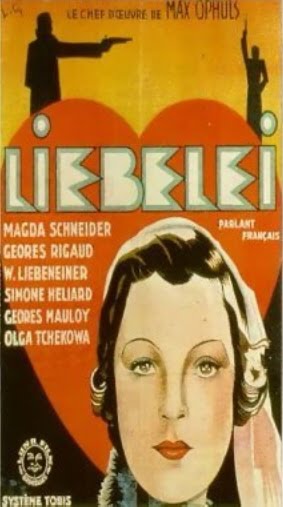
●Liebelei is an exquisite romance by the master of moody, doomed love, Max Ophüls, who would go on to direct such masterpieces as Letter From An Unknown Woman and The Earrings Of Madame de ....
●And then there's The Testament Of Dr. Mabuse, Fritz Lang's sequel to his 1922 film Dr. Mabuse The Gambler. The Nazis took Lang's story of an insane criminal mastermind who controls his victims through hypnosis as a criticism of Hitler and his henchmen—it was—and Lang fled Germany shortly after production was completed.
I'm a fan of each of these films and, depending on my mood, I could champion any of them—you might particularly want to track down Vampyr as Halloween approaches—but this week I'm going with Jean Vigo's funny, poetic and influential look at life in a boy's boarding school, Zero For Conduct.
If you put the Our Gang comedies, Animal House and The Dead Poets Society in a blender, strained out the sentimentality and added a dash of Jean-Paul Sartre, Charlie Chaplin and Luis Buñuel, you'd get either a really awesome smoothie or Zero For Conduct (Zéro de conduite). The film's French subtitle, Jeunes Diables au Collège—"Little Devils At School"—is a pretty accurate description of the story's nominal heroes, three scamps, maybe age ten, who plot to take over their rundown school during a Commemoration Day ceremony and pelt the faculty with garbage.
"War is declared! Down with teachers! Up with revolution!"
And revolution is just what this school needs. With the exception of a newly-hired instructor (Jean Dasté) who imitates Chaplin and does handstands in class, the boys' teachers—led by a wizened dwarf with a preposterous beard and a hat he keeps under glass—are a wholly unsympathetic collection of spies, toadies, dimwits, bores and martinets, as small in spirit as the dean is in body. The boys rebel at every turn, instigating food fights (the cook serves nothing but beans) and pillow fights before finally leading the full-scale insurrection that caps this brief forty-one minute film.
"Zero For Conduct," wrote Terrence Rafferty for New Yorker magazine in 1990, "was a celebration of the pure freedom of children's imaginations, a stirring expression of resistance to the forces of authority and order—to anything that would impose discipline on the diverse, unruly energy of play." Nearly eighty years after it was made, "Zero For Conduct still seems ... like one of the few truly subversive movies ever made."
But while planning for "revolution" provides a unifying theme, the narrative of Zero For Conduct is primarily episodic, as life generally is at the age of ten, with director Vigo taking time to remember moments that a kid would find important—playing a toy trumpet with your nose, smoking purloined cigars, following an absent-minded teacher through the streets, chasing him as he tries to introduce himself to a pretty woman, then somehow getting sidetracked as they mistake a priest's flapping cassock for the girl's skirt.
At times Zero For Conduct reminded me of Yasujiro Ozu's I Was Born, But ..., the 1932 Japanese silent film about two school age brothers who play hooky, fake test scores and bribe a delivery boy to beat up the local bully. Of that movie I wrote "It's not that nothing happens, it's that nothing feels as if it's made to happen simply to satisfy the mechanics of plot."
Think of how the quest for the Red Ryder BB gun in A Christmas Story pulls together what are otherwise unrelated episodes in the life of little Ralphie Parker, and you'll get an idea of how Vigo uses talk of revolution to weave the various threads of Zero For Conduct into a single tapestry.
Visually, Zero For Conduct almost plays as a documentary, with most of the movie shot on location. Vigo comments on the action and the players with the placement of his camera, often photographing the students from below, emphasizing their oversize sense of their own maturity, while shooting their instructors from high-angle positions which tends to diminish them in our eyes. Vigo was a key figure in a loosely-defined movement called "Poetic Realism," which focused on marginalized characters, told stories tinged with nostalgia and fatalism, and relied on "heightened aestheticism" to emphasize the "representational aspects" of the film. No, I don't know what that means either, but I do recognize that there is a look and feel in the films of Jean Vigo that reminds me of Jean Renoir, Julien Duviver and Marcel Carné—like Vigo, members of the Poetic Realism movement—whose films were highly naturalistic in their look yet which featured action that clearly was scripted and staged.
As the film continues, though, Vigo also plays around with surrealism, which was still a hot ticket item in Europe. In addition to the films of Luis Buñuel, several directors working in France had taken stabs at the form including René Clair, Germaine Dulac, Jean Epstein, Man Ray and Jean Cocteau, and Jean Vigo underscores his theme of rebellion against convention with several surreal scenes—a teacher's drawing comes to life, sheepishly transforming itself, as the lone sympathetic teacher is rebuked by a colleague, from a man in swim trunks into the cloaked visage of Napoleon; a student does a slow-motion backflip into a chair; and a professor is tied to his bed and suspended from the wall while he sleeps. There's also one brief, surprising shot of full-frontal male nudity, not in the least sexual, more in the tradition of "I wave my private parts at your auntie," which I suspect was Vigo's way of giving French authorities the finger.
The spirit of rebellion that infuses Zero For Conduct was not lost on French authorities—after the film's premiere on April 7, 1933, it was banned and was not shown again in France until February 1946, nearly twelve years after Vigo's untimely death.
I confess it took more than one viewing for me to appreciate Zero For Conduct—I carried into my first viewing certain Hollywood-bred expectations of what should/would happen and I kept waiting for the predictable plot-twists and the ending wrapped up with a bow. It wasn't until the second time through that I allowed myself to enter into the spirit of the thing and remember what it was really like to be a kid. Sometimes as adults we forget how momentous little episodes are to children and to their development, and while you know that in one sense nothing will change after the boys have taken over the school, in more important ways, everything will change as their perceptions of themselves will forever be altered—there's a big difference between being someone who "could" do a thing and being someone who "has done" that thing.
Zero For Conduct was a flop at the box office, won no awards and was barely seen outside of Paris until after World War II, yet it directly influenced Francois Truffaut's greatest film, The 400 Blows, and the French New Wave generally. That's pedigree enough for me.
Born in Paris in 1905, Jean Vigo was the son of the French anarchist Eugeni Bonaventura de Vigo i Sallés, better known as Miguel Almereyda. When Vigo was twelve, his father was arrested and later murdered in his prison cell, presumably by his jailers. Hustled out of Paris, Vigo was educated under an assumed name in the south of France, yet despite the outrage he felt for French authorities, Vigo found things to love—his fellow students, later his wife and friends—and he found ways to translate that tenderness into film. Suffering from the tuberculosis he had contracted at the age of twenty-one, Vigo literally worked himself to death, directing his follow-up film, L'atalante from a stretcher and dying a few months after its completion in 1934.
Postscript: To my knowledge, Zero For Conduct is not readily available in the U.S. There are better copies floating around the internet, but at least I can show this battered, murky print legally.
Boudu Saved From Drowning (prod. Michel Simon) Liebelei (prod. Herman Millakowsky) The Testament Of Dr. Mabuse (prod. Fritz Lang and Seymour Nebenzal) Vampyr (prod. Carl Theodor Dreyer and Julian West) Zero For Conduct (prod. Jean Vigo)
À Nous La Liberté (prod. Frank Clifford) Frankenstein (prod. Carl Laemmle, Jr.) Freaks (prod. Tod Browning) Grand Hotel (prod. Irving Thalberg) Monkey Business (prod. Herman J. Mankiewicz) Scarface (prod. Howard Hughes) Waterloo Bridge (prod. Carl Laemmle Jr.)
[To read part one of this essay, click here. To read part two, click here.]
III. And The Winner Is... ... René Clair for À Nous La Liberté.
That's not the name I expected to see on my computer screen when I put my fingers on the keyboard. I fully expected to type "Howard Hawks for Scarface"—after all, Scarface is the best gangster movie of a decade characterized by great gangster movies, and it may well be the best gangster movie made before The Godfather—but in the end my heart decided that Scarface contained too many compromises to appease the censors, too much clumsy footage filmed by assistant director Richard Rosson, to make me comfortable telling you that this is the movie you want to see when you go exploring the films of Howard Hawks. And given the lack of so many signature Hawks elements—male comradery, strong women, fast dialogue, slow songs—giving Hawks the award for Scarface felt a little like giving Alfred Hitchcock an award for a screwball comedy; yes, he directed one, but it's not really what I'd think of a Hitchcock movie.
The other choice I strongly considered was James Whale who directed what I think is the most iconographic picture of the year, Frankenstein, which along with its sequel, Bride of Frankenstein (also directed by Whale), is the best of Universal Picture's cycle of horror pictures that began earlier in 1931 with Dracula and runs right up to this year's remake of The Mummy. The imagery of Frankenstein is so unforgettable that I could probably describe the movie to you in terms of its key scenes—the graveyard, the laboratory, the electrical storm, the tragedy of the little girl—and you could picture the movie in your head (and not just because Mel Brooks spoofed it so well in Young Frankenstein). Plus, Boris Karloff as the monster is easily the most recognizable creation in the long history of horror movies. But let's face it, there are aspects of Frankenstein that are pretty creaky by modern standards, and while I won't hold that against the finished product come best picture time, it is just enough to separate Whale from my choice, René Clair.
And why Clair? It's not just because he was Katie-Bar-The-Door's choice in the recent poll I conducted on the question—although any eighty year old movie that can make your wife's eyes light up deserves some sort of award—it's mostly because of all the movies that came out during the year in question, À Nous La Liberté comes the closest to being what I'd call a perfect little film, entertaining, inventive, insightful and without a false step. Plus in 1931 Clair also wrote and directed Le Million, another classic little comedy, making him one of the very few directors to have ever produced two must-see classics in the same calendar year. In the end, those factors were just too great to ignore.
À Nous La Liberté begins in prison where the inmates work at an assembly line making toys to earn their keep. The joke is that one of the inmates (Henri Marchand) escapes and winds up running a factory with an assembly line he models on his prison experience. His cellmate (Raymond Cordy), who was not so lucky during the escape attempt, winds up working at his friend's factory after his release. When the two meet, conflict is inevitable—but not the kind you'd expect, things like blackmail, scandal or any of those garden variety complications. No, the threat come from the anarchy that a true free spirit can unleash on the established order if he infects his fellow workers with his indifference to the inducements of materialism.
The result is a quirky blend of slapstick comedy and social criticism that has delighted audiences and influenced filmmakers for decades.
Not that À Nous La Liberté is a socialist screed straight out of Das Kapital, no matter what some critics have wanted to read into it. It's political in the way Duck Soup is political—a call to rebellion against regimentation wherever you may find it, whether at school, at work or at home—whipped up into a souffle so light even the staunchest plutocrat will want to tuck into it.
Actually, Clair's philosophical insights remind me mostly of Henry Miller who, once you get past the famously raunchy sex bits, was primarily focused on one question: why should I work for a living when what I want to do is write? For "write," Clair might substitute "make movies and nap in the sunshine," but it's the same question and given that the same yawning grave awaits you regardless of what path you choose, a fundamental one.
Besides, anyone here who has worked on an assembly line and can honestly say they found it fulfilling, interesting work, raise your hand. My own experience is limited—a summer job in my youth filling up plastic bottles with fruit juice—but it was the worst job I ever had and I don't think saying so makes either me or René Clair a left-wing anarchist.
The other theme of the movie, one Clair explored in Le Million, is the deference we pay to money and the people who have it, regardless of their underlying worth as human beings. Put a criminal in a suit, Clair says, give him money and a position of power, and suddenly we're kowtowing to him even when we'd have hauled him away in irons just the day before, and our reflexive willingness to do so goes a long way toward explaining the dot.com debacle, the housing bubble, Bernie Madoff and the seemingly endless parade of public figures who wind up in prison shackles for real. A criminal is a criminal, Clair reminds us, whether he's in prison stripes or pinstripes.
To make even this mild political message palatable, Clair set the entire movie, which is pretty near silent, to music with most of the dialogue coming in form of songs sung by an unseen chorus. The compositions by Georges Auric are bright and whimsical:
In life, liberty is all that counts But man invented the prison cell Codes and laws, do's and don'ts Work, offices and houses as well ... My old friend, life is great When you're free to be yourself o come on, let's emancipate ... Here's to us two and liberty!
À Nous La Liberté was an international hit, and it was the first foreign language film nominated for an Academy Award in any category (for Lazare Meerson's art direction and set design).
Questions persist to what degree Clair's cinematic critique of industrialization influenced Charles Chaplin's 1936 critique of the same, Modern Times. The film's distributor, Films Sonores Tobis, filed suit against Chaplin, claiming plagiarism, and the suit dragged on for years as lawsuits often do. Clair himself refused to join the suit, considering any inspiration Chaplin might have drawn from À Nous La Liberté to be a great compliment. Personally, I take Chaplin at his word that he never saw Clair's movie, and in any event, as a lawyer I find the legal basis for the case against Chaplin thin at best. Clair was hardly the first person to lament the de-humanizing effects of the industrial age—indeed, Fritz Lang's Metropolis predates À Nous La Liberté by four years—and being one of the primary questions of the day, of interest to painters and politicians alike (not to mention, workers and factory owners), it should come as no surprise that two artists such as Clair and Chaplin would wish to address it.
Nor can an artist copyright an idea; it's the concrete expression of the idea that he owns, and to me at least, what Chaplin had to say in Modern Times bears less of a resemblance to À Nous La Liberté than does, say, Scarface to Little Caesar or The Terminator to Colossus: The Forbin Project; Gone With The Wind to Jezebel; To Have And Have Not to Casablanca, and on and on. As Kurt Vonnegut once pointed out, there are only twelve basic plots which we have been repeating for thousands of years and the question is not what happens but how it happens. And, to me at least, how Modern Times happens is wholly different from how À Nous La Liberté happens.
In any event, it doesn't much matter to me. To tell you the truth, even if Chaplin had broken into Clair's house and taken the movie right out of his wall safe, it wouldn't alter the fact that Modern Times is one of the greatest comedies ever made. As is À Nous La Liberté. Enjoy them both.
That's my opinion anyway and good luck proving otherwise in a court of law.
In any event, the suit was eventually settled for a nominal sum and Chaplin and Clair remained friends.
Clair never again had a year like 1931. He left France for Britain in 1935 and then for Hollywood after that, making amiable but mostly forgotten movies such as I Married A Witch and It Happened Tomorrow. He returned to France after the war and three times won the French Syndicate of Cinema Critics' award for best film. In 1960 Clair was elected to the Académie française, a highly-select group of so-called "immortals" who hold court over matters regarding the French language. That body's prize for the year's best film is named for René Clair.
Clair directed his last movie in 1965 and died in 1981. He is regarded as one of the most significant figures in French film history.
II. The Contenders I chose five nominees for best director of 1931-32: René Clair (À Nous La Liberté), Rouben Mamoulian (Dr. Jekyll and Mr. Hyde), James Whale (Frankenstein), Edmund Goulding (Grand Hotel) and Howard Hawks (Scarface). It's a deep field and any one of them would be a good choice, I think, but from looking at other alternate Oscar type blogs, there doesn't seem to be a clear consensus as to who it should be. Danny Peary, whose book Alternate Oscars inspired this lunacy, picked Howard Hawks, as did Nighthawk of The Boston Becks. Jon Mullich at Madbeast.com chose Rouben Mamoulian, while Masted at Listology went with James Whale (although Masted follows the calendar rather than Oscar year). Boudu at Top Movies, who also follows the calendar year, threw me a curveball and picked Yasujiro Ozu for I Was Born, But ... Can't say he's wrong, but I've got Ozu's Tokyo Story down in my notes as the winner for 1953 and that award is written in permanent ink. Finally, although Films 101 doesn't pick winners, that site has ranked René Clair's À Nous La Liberté as the best of the eligible movies, so that probably means something.
Which seems to leave poor Edmund Goulding out in the cold, but as Jon Mullich wrote, "Goulding did a remarkable job in directing so many high caliber, high ego names in the cast [of Grand Hotel], and got particularly remarkable performances from Joan Crawford and Lionel Barrymore." He deserves serious consideration.
René Clair you already know, if you've been following this blog. The French director was one of the true pioneers of the early sound era, not only figuring out how to integrate sound with a fluid camera—a real technical achievement in and of itself—but also using the new technology in ways no one had before thought of to enhance his storytelling. Between 1929 and 1931, he made the three best films of his career, Under The Roofs Of Paris (which I wrote about here), Le Million (here) and this year's best picture nominee, À Nous La Liberté. I won't reiterate here what I've already written about him except to say that what I wrote about Le Million—"[It] really is a Saturday night movie, full of slapstick and sightgags, and the only thing that keeps me from naming it the best Fun-Stupid movie of [the year] is my reluctance to task your patience with subtitles"—also applies to À Nous La Liberté, a whimsical and sometimes biting comedy about two prison inmates, one of whom escapes and winds up as the CEO of a factory that, ironically, he runs like a prison; the other who later coincidentally takes a job in the same factory with all hell thereafter gently but decidedly breaking loose. It's witty, inventive and unforgettable, a real contender.
Like Clair, Rouben Mamoulian immediately grasped the storytelling possibilities inherent in the new sound technology and like Clair and Fritz Lang, he figured out how to work around the limitations of bulky sound recording equipment to maintain the fluid camera work that characterized the end of the silent era. I mentioned him (here) in connection with the 1929 movie Applause which he filmed on location in the New York subway system and used recorded traffic and crowd noises for the soundtrack. I'll mention him again when we get to the 1932 musical comedy Love Me Tonight, which includes an inventive introduction to the song "That's the Song of Paree" using only the sounds of the city—the swish of a broom, the snore of a sleeping drunk, etc.—and a clever staging of the standard "Isn't It Romantic," which starts with a three-sided reflection of Maurice Chevalier in a tailor's mirror and winds up on the balcony of a princess.
"Realism and naturalism are not for me," Mamoulian said later. "I think it's too feeble an instrument."
His Dr. Jekyll and Mr. Hyde opens with a tracking shot so audacious, the studio later cut it out the film and it wasn't seen by audiences after its initial release until the film's restoration forty years later. Mamoulian didn't care that audiences might hear the movement of the era's bulky sound cameras—if the scene was good enough, he reasoned, they'd be too engrossed in the action to notice. This approach was nearly unique in Hollywood during the early sound era and having immersed myself in the films of the period, I can tell you the work of those directors—Clair, Lang, Mamoulian—who solved the technical and artistic puzzle of sound fairly leaps off the screen.
In addition, the special effects in Dr. Jekyll, while primitive by today's standards, equal or better those of any movie before 1933's King Kong. Relying on layered makeup and filtered camera lenses, Jekyll makes a seamless transformation into Hyde, a truly impressive bit of filmmaking.
A Broadway stage director by trade and preference, Mamoulian returned to the theater where in 1944, he directed the groundbreaking stage musical Oklahoma. He directed only seventeen movies in his career, very few of which are known to modern audiences. Aside from Dr. Jekyll and Mr. Hyde, his best known films are Greta Garbo's Queen Christina, Tyrone Power's 1940 version of The Mark of Zorro and the late-era Fred Astaire musical Silk Stockings. He also directed the first three-strip Technicolor film, Becky Sharp, starring Miriam Hopkins, and won the New York Film Critics Circle Award for directing the 1936 musical The Gay Desperado, starring Ida Lupino. He was fired from his last two directing gigs, the 1959 film version of Porgy and Bess and 1963's Cleopatra, and retired. In 1982 he was awarded the Lifetime Achievement Award from the Directors Guild of America. He died in 1987 at the age of ninety.
Equally creative was James Whale, who if he didn't invent the horror genre, redefined it so thoroughly that it's difficult, even now, to make a horror film without dipping into the bag of tricks he came up with for Frankenstein and its sequel Bride of Frankenstein. While Dracula was the first blockbuster horror film of the sound era, Whale's Frankenstein was the first to make use of sound's potential to scare the bejeezus out of an audience. (Fritz Lang's M also took full advantage of the new medium, but wouldn't be released in the United States until 1933, two years after Frankenstein.) Whale also worked hand-in-hand with set designer Charles D. Hall and makeup artist Jack Pierce to create some of the most iconic images of film history. And of no small consequence to the people who paid his salary, Whale also single-handedly kept Universal Pictures afloat during the early years of the Depression with a string of hits that included not only Frankenstein but also The Old Dark House, The Invisible Man and Bride Of Frankenstein, offsetting, for a time at least, producer Carl Laemmle, Jr.'s spendthrift ways.
Yet, for all his mastery of the horror genre, Whale didn't think of himself primarily as a horror director. He got his start on the London stage, both as an actor and as a set designer and most of his films were adaptations of theatrical dramas rather than horror. He directed another Katie nominee, Waterloo Bridge starring Mae Clarke, and Show Boat (the version with Paul Robeson's legendary performance of "Ol' Man River") (more about that when we reach 1936).
Despite reaching such heights, though, glory proved to be fleeting for Whale. After 1935's Bride of Frankenstein, which he resisted making for as long as he could, he never again directed a horror picture, and although credited with directing Show Boat, he was actually fired before production ended, having uncharacteristically gone way over budget. Whale's career took a nosedive after that. He directed a string of commercially unsuccessful pictures and was pretty much out of movies by 1941, directing only once more, filming in 1949 a forty-minute stage performance that was never released. In 1957, after a series of strokes, Whale committed suicide by drowning himself in his swimming pool.
His life was the subject of the 1998 movie Gods and Monsters, starring Ian McKellen. Over the years, some critics have attempted to reinterpret Whale's work in light of the fact that he was one of the few openly gay directors working in Hollywood—for example, "Sexual Subversion: The Bride Of Frankenstein" by Gary Morris writing for Bright Lights Film Journal—but friends and colleagues have dismissed the effort. "All artists do work that comes out of the unconscious mind," said friend and fellow film director Curtis Harrington, "and later on you can analyze it and say the symbolism may mean something, but artists don't think that way and I would bet my life that James Whale would never have had such concepts in mind."
Me, I don't know and I have no opinion. Arguments between film critics are mostly of interest only to other film critics and they aren't much help to an audience sitting in a dark theater. All I know is that I like those old Universal horror movies and that Whale was their principal author. Good enough for me.
Of Edmund Goulding, you're likely only to remember the last thing I will tell you, so here are three facts to chew on before we get to it: (1) he had an eye for emotional truth that made him one of the best directors of actors ever, with nine of his stars receiving Academy Award nominations (two—Mary Astor in The Great Lie and Anne Baxter in The Razor's Edge—won), and others such as Joan Crawford and Tyrone Power, though not nominated, giving arguably the best performances of their careers in his movies; (2) while known primarily as a director of so-called "women's pictures" such as Dark Victory and The Old Maid, he was a master of many genres, including action (the 1938 remake of The Dawn Patrol with Errol Flynn) and film noir (Nightmare Alley); and (3) on the set, he was a jack-of-all-trades, not only directing, but writing screenplays, composing music, and overseeing the details of set design, costumes and even makeup; everything, in fact, but cinematography: according to Lee Garmes, Goulding wasn't good at picturing what the camera was filming and wasn't much interested either.
And here's a fourth fact: three movies he directed, Grand Hotel, Dark Victory and The Razor's Edge were nominated for best picture (with Grand Hotel winning). Yet he was never nominated for best director.
Why not? Well, quite possibly because Goulding, not to put too fine a point on it, was a bad, bad boy, a bisexual voyeur who held elaborate orgies in his house, directing movie stars and nameless-faceless hookers alike in elaborate sexual scenes that horrified the part of Hollywood likely to be horrified by such things, and potentially embarrassing the part of Hollywood that secretly indulged themselves of his offerings. In fact, right around the time Grand Hotel was raking it in at the box office, Louis B. Mayer was hustling Goulding out of the country one step ahead of the cops who wanted to question him about two women who wound up in a hospital after one of these parties.
How wild were these parties? Let's put it this way: Katie Award-winning actress Louise Brooks, who is one of the most scandalous figures to grace the pages of this blog, was considered too much of a Midwestern prude to receive an invitation to these little shindigs, despite being one of Goulding's friends and one of the few people who had nice things to say about him later in life. It's kind of like how Jenna Jameson, the most famous porn star ever, turned down a date with Charlie Sheen because she didn't want to ruin her reputation. You don't have to know the details to know it was bad.
Which leaves Howard Hawks. If the best director award were purely a matter of career achievement, Hawks would be the winner, hands-down (and he may be anyway). Not only did he direct more great movies during the course of his career than any of his competitors—maybe more than all of theirs combined—he directed as many great movies as any director you can name and belongs, to my mind at least, on a Mt. Rushmore of great American directors.
But the best director award is not a career achievement award—well, not entirely a career achievement award—and so Hawks isn't guaranteed to win the award if and/or when I ever get around to making a decision, at least not this year. Still, I'm either going give him a Katie Award at some point, whether tomorrow or for Bringing Up Baby, His Girl Friday, Rio Bravo or something else. You can count on it. He directed forty-seven in all, mastering every genre in the process, and is movies will be a recurring feature of this blog.
I will say one thing about Scarface, though—while it is undeniably one of Hawks's best movies, it's also wholly atypical of his work. Although it was here he first began to experiment with faster-paced dialogue, it's staid by comparison even to Twentieth Century which he directed just two years later. Nor does it feature the overlapping dialogue that became a mainstay of his work nearly four decades before Robert Altman invented it. There are no "Hawksian" women either, no male comradery, no songs or purposeful lulls in the action, and no action-packed meditations on stoicism in the face of danger. Not to mention there's an awful lot of the sort of fancy camera work—for example, the elaborate tracking shot that opens the picture—that Hawks would later eschew. In fact, if you didn't already know this was a Howard Hawks film, you'd never know it was a Howard Hawks film. And I'm sort of thinking when I finally get around to writing about him, I want to be writing about him, not just a facsimile thereof. You know?
Still, a great movie is a great movie, right? But then the same can be said of À Nous La Liberté, Dr. Jekyll and Mr. Hyde, Frankenstein and Grand Hotel.
In any event, there are your five nominees. While all of them are deserving, only one can win. I don't know about you, but I'm on the edge of my seat wondering who it will be.
No, really, I was born, no ifs ands or buts. But that's not what I'm talking about. I'm referring, of course, to the 1932 silent Japanese classic, I Was Born, But ... (the full title translated from the Japanese is A Picture Book For Grown-Ups: I Was Born, But ...), by perhaps the greatest of all Japanese directors, Yasujiro Ozu.
If you don't know who Yasujiro Ozu is, perhaps it's time to get acquainted.
"Sooner or later," Chicago Sun-Times critic Roger Ebert has written, "everyone who loves movies comes to Ozu. He is the quietest and gentlest of directors, the most humanistic, the most serene. But the emotions that flow through his films are strong and deep, because they reflect the things we care about the most: Parents and children, marriage or a life lived alone, illness and death, and taking care of one another."
This is one of Ozu's earliest efforts, and his first great film. Like everyone, Ozu had to start somewhere. A big fan of Hollywood comedies, particularly those of Ernst Lubitsch and Harold Lloyd, Ozu cut his teeth during the silent era on a series of family comedies with titles such as I Graduated, But ... and I Flunked, But ... The best of them, I Was Born, But ... was a breakthrough that proved to be a harbinger of Ozu's later brilliance.
Despite being produced in 1932, the movie is silent. The plot could be that of an Our Gang comedy—the antics of little boys and the mysteries of their social pecking order—focusing specifically on a pair of brothers, maybe ages six and seven, loveable scamps who play hooky, fake test scores and bribe a delivery boy to beat up the local bully. They play rousing games of one-upmanship—my dad has a fancy car; oh, yeah? my dad can take out his teeth!—they watch home movies, they collect sparrows eggs. The two boys are refreshingly close (they remind me of my own brothers) egging each other on and presenting a united front against the world. Eventually, they take over leadership of the gang and all is right with the world.
But then at a party, the boys discover their dad, far from being the important man they imagine him to be, is in fact a non- entity, the butt of his boss's jokes, a self-confessed "apple polisher." This is where the simple comedy becomes something more, a wickedly funny insight into the human condition.
"You tell me to be somebody," says the older boy, "but you're nobody!" Then he demands to know why his father must kowtow to his boss.
"He pays my salary," his father says.
"Then don't let him pay you," the boy says.
"Yeah!" the little brother adds with the implacable logic of a six year old. "You pay him instead!"
Out of the mouths of babes.
"Are you important?" the boy asks.
"Why are you pestering me with these questions?" the dad snaps.
"See?" says the boy. "He's not."
I'd have paid money to see Beaver Cleaver have the same conversation with his dad, and I'll bet you that like the father in I Was Born, But ..., Ward curled up with a bottle of Hennessy on many an evening after the closing credits rolled.
By the end of the scene, which includes a first-class tantrum, the boys receive well-earned spankings, but the father is deeply chagrined—sometimes truth is a dish best not served at all, especially when it proves indigestible. But don't despair. This is a comedy and all ends well.
I Was Born, But ... has a documentary feel, and in the hands of another director, the effect would be cold, austere, affected. In Ozu's hands, it's as real as life itself and his work here makes the shaky-cam and frenetic editing of today's movies feel noisy, tedious and utterly phony. It's not that nothing happens, it's that nothing feels as if it's made to happen simply to satisfy the mechanics of plot.
Ozu six times won the Kinema Junpo award, the Japanese equivalent of the Oscar for best picture, including one for I Was Born, But ... Despite being the most celebrated director in Japanese history, however—at least in his own country—Ozu's films weren't seen in the United States until 1970, seven years after his death, previously having been deemed "too Japanese" for Western tastes. (Ironically, Akira Kurosawa, who directed such masterpieces as Rashomon and Seven Samurai, lost favor in Japan because he was deemed "too Western.") Since his introduction to the West some forty years ago, Ozu's reputation has risen steadily; his best movie, 1953's Tokyo Story, now routinely make lists of the Ten Best Films ever made. (Assuming I live long enough, we'll eventually get to Tokyo Story.)
If you're at all interested in Ozu, silent movies or family comedies, you'll want to see this early step in the master's development. But only watch it with the kids if you're a very self-confident father.
René Clair (À Nous La Liberté) Edmund Goulding (Grand Hotel) (here on the set with Wallace Beery and Joan Crawford) Howard Hawks (Scarface) (on the set of 1959's Rio Bravo with Angie Dickinson) Rouben Mamoulian (Dr. Jekyll And Mr. Hyde) James Whale (Frankenstein)
Personally, I hate putting labels on movies. Terms like "chick flick" and "fun-stupid," while useful to lazy critics and unimaginative marketing departments, are more often than not designed to say to the ticket-buying public (or Oscar voters) "it's safe to skip this one." Plus, a label like "gay cinema" creates certain story expectations that, in the case of Mädchen in Uniform at least, have nothing much to do with what's on the screen.
I could just as accurately label Mädchen in Uniform "boarding school cinema" and lump it in with Diary of a Lost Girl and Dead Poets Society. But failing to note that a movie made in 1931 treated the subject of homosexuality with seriousness and sensitivity would be like an archeologist failing to note that he found a television set buried in King Tut's tomb.
Images of gays in the movies of the early sound era were few and far between; and positive ones? Forget it. One of Clara Bow's last films, 1932's Call Her Savage, included a scene in a gay bar, the first and last such scene in a Hollywood movie until Otto Preminger's 1962 movie, Advise and Consent, but otherwise gay men existed at best as foppish creatures of ambiguous sexuality and at worst as "sissies" subject to ridicule and broad comedy.
Lesbians fared a little better—think of Marlene Dietrich kissing a woman in Morocco (1930) or Greta Garbo proclaiming she'd "die a bachelor" in Queen Christina (1933)—but a lesbian relationship was never front and center in a Hollywood movie. More often, Hollywood simply pretended that gays and lesbians didn't exist, for example, turning the lesbian relationship at the heart of Lillian Hellman's The Children's Hour into the heterosexual triangle of These Three.
That's why seeing a movie like Mädchen in Uniform feels so much like stepping into a time warp—there wouldn't be another movie like it for decades. Perhaps it shouldn't be surprising that it came from Germany; film critic Ruby Rich in talking about the film, noted that Berlin under the Weimar Republic was remarkably open to gays and lesbians such as Christa Winsloe who wrote both the script and the stage play it was based on, and Leontine Sagan who directed both versions of the story. The movie "comes to us directly from that era," Rich said, "and shows us the kind of scene that flourished there."
Mädchen in Uniform is the story of a fourteen year old orphan girl, Manuela (Hertha Thiele in her film debut), the niece of a wealthy aristocrat who warehouses her at a prestigious boarding school. The school's elderly headmistress (Emilia Unda) is the proud daughter of a Prussian officer and modeling her school on that military tradition, is regimented, authoritarian and cruel.
"Through discipline and hunger we will become great again," she says as she dismisses student complaints of malnutrition and mistreatment, "or not at all!" The movie was filmed just two years before Hitler took power in Germany and the school and its principal were swipes at the rising Nazi tide and its threat to a free society. At this school, books outside the classroom are forbidden, letters are censored and the girls' striped uniforms bear an uncomfortable similarity to those later worn by concentration camp inmates.
Indeed, life at the school is so regimented, the only warmth its students know is a nightly kiss on the forehead bestowed by their favorite teacher, Fraulein von Bernburg (Dorothea Wieck). "Don't fall in love!" one of the girls teases Manuela when she arrives. "All the girls are crazy about Fraulein von Bernburg."
Manuela sees in her teacher a substitute for the mother she lost many years before and as she is overwhelmed by a confusion of emotions—loneliness, homesickness, her own budding sexuality—she develops a crush on Bernburg so palpable her feelings are soon obvious to everyone. Manuela's story, that of a lonely girl searching for something, is the film's strength—loneliness, ironically, being one of the chief traits all human beings share.
Fraulein von Bernburg's feelings are more ambiguous —she expresses concern for Manuela and the girls, displays maternal affection, and yet the first time she lays eyes on Manuela descending a staircase, the look is as frank as Rhett Butler's as he pictures Scarlett O'Hara without her shimmy on. And indeed, the first night, as Bernburg kisses each girl on the forehead, Manuela impulsively throws her arms around her teacher—and Bernburg responds by kissing the girl on the lips.
"What you call sin, Frau Principal," Bernburg says, "I call love which has thousands of forms."
Later, when an act of kindness is misconstrued, the simmering tension between the authoritarian principal and the compassionate teacher comes to a boil.
The film's ending, in stark contrast to that of the play, is hopeful. Whether Winsloe and Sagan settled on the changes for artistic reasons or to appease German censors, I can't say, but at least, as Ruby Rich put it, they spared us the cliche of "lesbian suicide."
The film also spares us the cliche (or is it the reality?) of Mean Girls-style conflict between the students. The girls here are refreshingly supportive of one another and rather than turning on each other in the face of oppression, they rally together. Indeed, they are seen as Germany's greatest hope to avoid the coming disaster. In light of what soon after transpired in Germany, however, the filmmakers' optimism proved to be nothing more than wishful thinking.
Mädchen in Uniform premiered in Germany on November 27, 1931. It was initially banned in the United States until Eleanor Roosevelt, wife of New York governor Franklin Roosevelt, interceded on its behalf and in September 1932, it played briefly in New York City. While audiences of the time—and certainly censors—were shocked at the film's subject matter, I'm not sure a modern audience would react any differently today. While we may now be open to the characters' sexual orientation, I suspect most of us would look askance at the hints of pedophilia, an issue the filmmakers seemed blind to.
As with every other director of quality in Germany in the early Thirties, there was no place for director Leontine Sagan in Hitler's new regime. Unlike the case of directors such as Fritz Lang (whose own M would make an interesting double feature with Mädchen in Uniform), there was no room for Sagan in Hollywood either. She directed only two more movies, both for Alexander Korda in England, then moved to South Africa where she founded the National Theater of Johannesburg.
Playwright and screenwriter Christa Winsloe also left Germany when the Nazis took power and joined the French Resistance during the war. On June 10, 1944, four Frenchmen mistook her for a spy and shot her; they were later acquitted of her murder.
Dorothea Wieck made a couple of Hollywood films, neither a success, then returned to Germany where she continued to work in supporting roles for another forty years. Hertha Thiele resisted offers by the Nazi party to perform in propaganda films and in 1937 emigrated to Switzerland where it took her five years to find work. After the war, she worked in East Germany as a nursing assistant before returning to acting in the mid-1960s.
As for the subject matter itself, with enforcement of the Production Code in 1934, portrayals of gays and lesbians were driven even further underground. Gays and lesbians would have to be satisfied with the occasional Mrs. Danvers or Joel Cairo, characters ambiguous enough to slip past the censors, if not audiences. Not for another thirty years would Hollywood again openly address the issue.
Postscript: Unfortunately, Mädchen in Uniform is not available on DVD. It pops up periodically on cable (I taped it off the Sundance Channel years ago), or if you don't mind watching it on YouTube, you can see it here.


 For a while at least, the good folks at Hulu.com have made Carl Theodor Dreyer's horror classic Vampyr available for viewing. And how do you know it's a classic? Why, because it received Katie Award nominations for best foreign language picture and best director—it must be good.